Rachel Changed My Life Insurance—Until Investigators Found Her Secret Death Plan
My sister had changed the beneficiary on my life insurance policy without my permission.
I learned that in a quiet federal office at 12:17 on a Tuesday afternoon, with one hand wrapped around a paper cup of coffee and the other pressed against my locked office door.
“Ms. Martinez,” the insurance representative said, “we’re confirming the beneficiary change requested last Tuesday.”
I stared at the framed certificate on my wall. It recognized ten years of government service. My family considered that certificate proof I had spent a decade answering phones.
“What beneficiary change?” I asked.
“The primary beneficiary was changed from your estate to Rachel Martinez, listed as your sister.”
The air seemed to thin around me.
“I did not request that.”
There was a careful pause.
“The caller provided your policy number, Social Security number, date of birth, and the answers to your security questions.”
My coffee went cold in my hand.
“Who called?”
“We can’t disclose the recording without a formal request, but the change was submitted through our customer service line. A confirmation email was sent afterward.”
“To what email address?”
The representative read it.
It was mine.
Not the work address I had used for insurance correspondence. My personal address. The one Rachel had known since we were teenagers.
I closed my eyes.
For years, my family had treated my job as a harmless government desk position. My sister had mocked my salary, my clothes, my cautious spending, and my habit of locking my apartment door even when I was inside.
They had never understood that I had spent most of my career learning how criminals behaved when they thought no one was paying attention.
They had also never understood how dangerous it was to give a determined person enough personal information.
“Freeze the policy,” I said.
“We can place a temporary fraud hold.”
“Do that. No changes, no withdrawals, no correspondence redirection, nothing without in-person verification and a written fraud review.”
The representative’s tone changed. “Are you alleging identity theft?”
“Yes.”
“And do you know who may be responsible?”
I looked through the narrow window in my office door at the rows of desks outside. Everyone was working. Phones rang. Printers clicked. Somewhere, someone laughed at a joke.
“My sister,” I said. “I believe my sister impersonated me.”
The policy had been a gift from my grandfather, Joe, after I finished my master’s degree in criminology.
He had slid the folder across his dining room table and told me that smart people planned ahead.
“It isn’t glamorous,” he had said. “But neither is being unprepared.”
Rachel had rolled her eyes.
“Who needs life insurance at twenty-five? She doesn’t have a husband, children, or anything important to protect.”
Mom had nodded. Dad had laughed.
“Joe wants Sarah to feel important,” he said. “A criminology degree turns a government clerk into a professional now?”
That was the family version of me.
A clerk.
Rachel was the impressive one. She managed a regional sales team for a pharmaceutical company, wore expensive suits, and posted photographs from hotels where I knew one night cost more than my monthly grocery budget.
Whenever relatives asked what I did, she answered for me.
“Sarah works for the government,” she would say with a smile. “Lots of paperwork. Very stable. Not exactly exciting.”
I used to explain that my work involved federal financial crimes, insurance fraud, identity theft, and wire schemes. I stopped after the third time she laughed.
“Please,” she had told me. “You’re not FBI. You sit behind a desk.”
She was right about the desk.
She was wrong about what happened there.
My unit traced forged documents, analyzed suspicious transfers, reviewed fraudulent insurance applications, and coordinated with investigators and prosecutors. We built cases from tiny contradictions: a timestamp, a login location, an email header, a signature made with the wrong pressure.
The people we investigated always had explanations.
They had been desperate.
They had misunderstood.
They had only borrowed the money.
They had never intended for anyone to get hurt.
They often believed family would protect them.
Rachel’s financial problems began after her company was acquired.
She called it a career transition. In private, Mom called it a temporary setback. In public, Rachel said she had left because the new management was threatened by strong women.
Her mortgage continued. So did her car payment, credit cards, memberships, dinners, and vacations.
One evening she appeared at my apartment without calling.
“Can you lend me fifteen thousand?” she asked.
“I don’t have fifteen thousand available.”
“You have savings.”
“Emergency savings. Not money for loans.”
Her eyes moved around my small living room. Used sofa. Secondhand bookshelf. A narrow television. Nothing expensive.
“But you have that ridiculous insurance policy.”
“It’s term insurance. There’s no cash value.”
“Then cancel it.”
“That wouldn’t solve your problem.”
Her face hardened.
“Family helps family, Sarah.”
That phrase became her answer to everything.
Family helps family when she needed money for utilities.
Family helps family when she needed help with her car payment.
Family helps family when she nearly missed her mortgage.
But family had not helped me pay off graduate school. Family had not furnished my apartment. Family had not built my emergency fund one careful deposit at a time.
By Christmas, Rachel had found a lower-paying job. She refused to sell the car, move, take a roommate, or admit her lifestyle had become impossible.
Then she started asking about my policy.
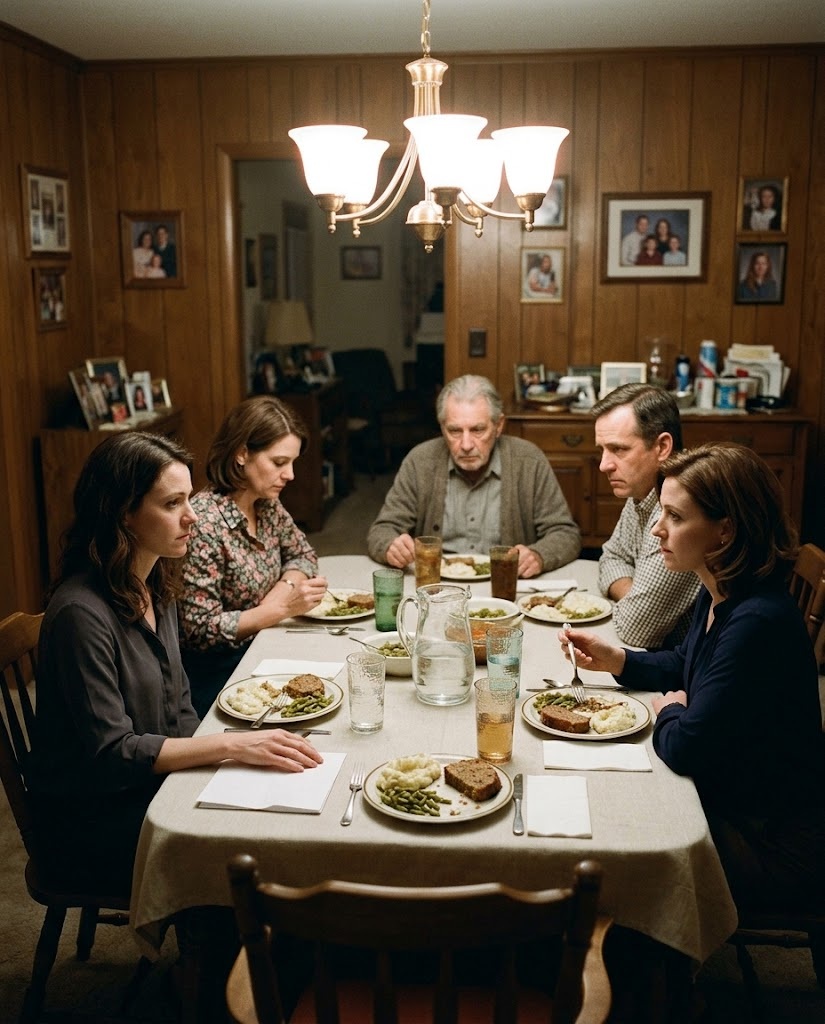
At dinner, she leaned back and smiled.
“What if I became your beneficiary?”
“Why?”
“You don’t have a husband or kids. If something happens to you, the money should stay with immediate family instead of getting tangled up in legal paperwork.”
Mom nodded. “That makes sense.”
Dad lifted his glass. “Rachel understands financial planning.”
I put my fork down.
“I’ll think about it.”
I meant I would think about how to end the conversation.
Rachel heard permission.
Three weeks later, she called the insurance company.
After I ended my call with the representative, I did not confront her. I did not call Mom. I did not send a furious text.
I sent a written fraud notice to the insurer and contacted the agency inspector general’s office through the proper channel. Because the policy was involved in a potential identity-theft scheme, my agency’s ethics officer assigned the matter to an investigator outside my chain of command.
I disclosed my relationship with Rachel immediately.
That was important. I could not investigate my own family. I could, however, preserve evidence and make sure no one dismissed the matter as a domestic misunderstanding.
The insurance company sent me the change request.
It contained a digital signature that looked like mine at first glance.
The curve of the S was close. The final stroke of the h was nearly right.
But my real signature ended with a short upward flick. The forged one dragged downward.
There was also a phone record showing the call had come from a prepaid number purchased at a pharmacy two miles from Rachel’s apartment.
The customer-service recording was worse.
The caller had sounded nervous, but she knew the answers. She knew the policy number, the date Grandpa Joe had purchased it, and the name of my employer.