Diane’s Sealed Folder Exposed What Her Son Tried to Hide Before Her Funeral
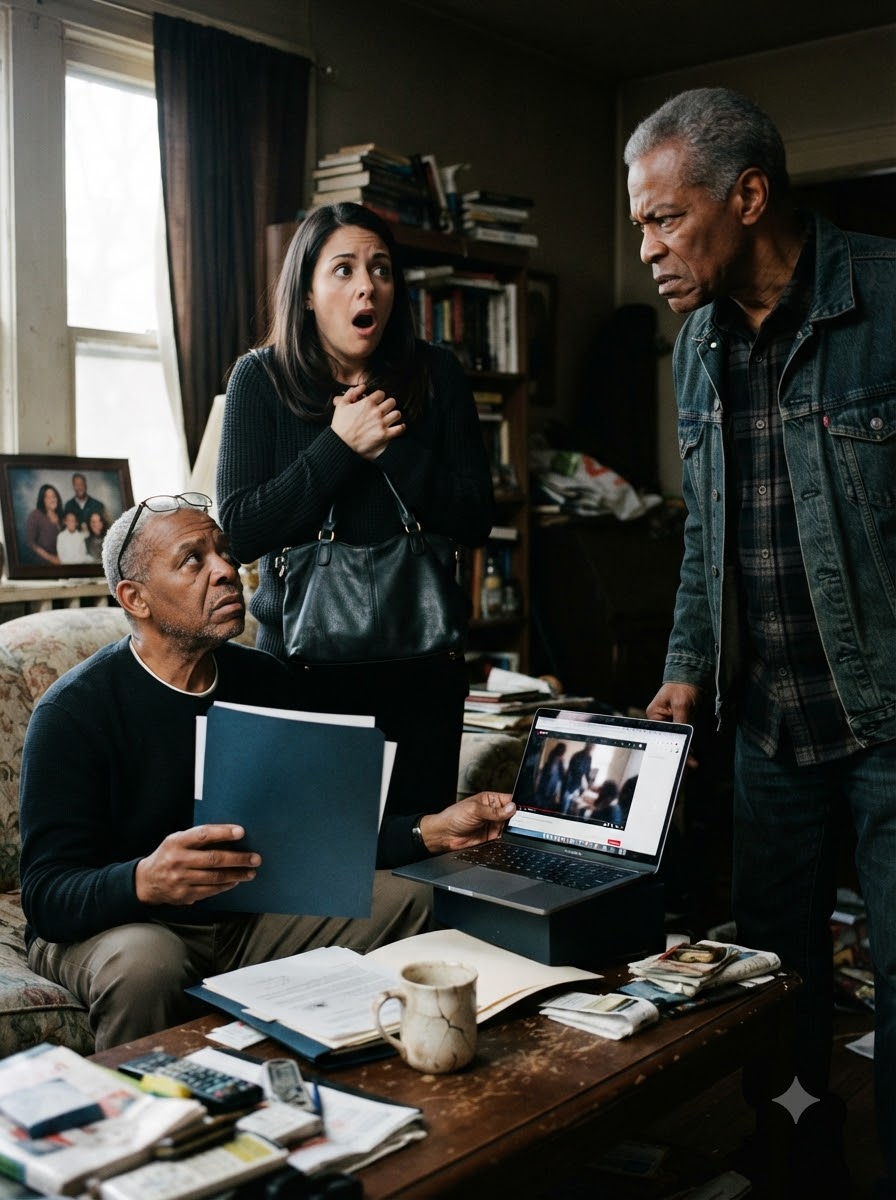
The morning Diane died, her coffee mug was still beside the sink.
It was the one with the tiny crack near the handle, the mug she had used every morning for nearly twenty years. I had washed it the night before, but she had been too tired to put it away. Now it sat in the gray light of the kitchen, a small ordinary thing in a house that no longer felt ordinary.
Diane had spent her final week asking for our son.
“Did Darnell call?”
“No, sweetheart.”
“Maybe he’s busy.”
“He knows you’re sick.”
She had looked toward the hallway, as if she might hear his key in the front door.
“Call him again tomorrow.”
I called him the next morning.
The phone rang twice. Then music flooded my ear—heavy bass, laughter, and the clink of glasses.
“Darnell,” I said. My hand was gripping the kitchen counter so tightly my fingers had gone numb. “Your mother died this morning.”
The music continued behind him.
For a moment there was only silence. I pictured him stepping away from the party, finally understanding that there were some words a person could never take back.
Then he sighed.
“Dad, don’t make this into a whole thing.”
I closed my eyes.
“She wanted to see you.”
“I know.”
“She asked about you every day.”
“I said I know.” His voice sharpened. “Look, my wife and I are leaving for Europe in a few days. The tickets can’t be refunded. Mom would understand.”
I stared at Diane’s mug.
“No,” I said quietly. “She would have made an excuse for you. That isn’t the same thing.”
He didn’t answer.
“Are you coming home?”
Another sigh.
“Dad, I can’t deal with this right now.”
Then he hung up.
Diane’s funeral was held on Thursday.
Five people sat in the chapel.
Five.
Her sister’s daughter came from Toledo. Two neighbors sat in the front row. Reverend Bell stood beside the casket. I sat alone on the other side of the aisle, staring at the flowers Diane had chosen months earlier for somebody else’s funeral.
Darnell did not come.
His wife, Vanessa, did not come.
There was no message. No apology. No flowers.
After the service, Harold Whitfield, the estate attorney who had represented Diane and me for more than twenty years, waited until the others had left.
He was carrying a slim leather briefcase.
“Raymond,” he said, “Diane asked me not to discuss certain matters until after the funeral.”
I looked at him.
“What matters?”
He opened the briefcase. Inside was a thick folder sealed with red wax. Diane’s signature crossed the flap.
“What is that?”
“Something she prepared three days before she died.”
My grief had been dull and heavy until that moment. Then it became alert.
“Was she expecting to die?”
“She understood the possibility.”
“She never told me.”
“She asked me to keep it that way.”
I looked at the seal. The ink beneath it was unmistakably hers.
“What’s inside?”
“I can’t tell you yet. She was very specific.” He closed the briefcase. “Keep the folder somewhere secure. Don’t open it without me.”
I nodded, though I had no idea where secure was anymore. Every room in the house held a piece of Diane. Her robe was still on the back of the bathroom door. Her reading glasses lay on the nightstand. The grocery list she had written in her careful handwriting was tucked beneath a magnet on the refrigerator.
I put the folder in the locked desk drawer in my study.
For ten days, the house became a museum of my marriage.
I moved from room to room without changing anything. I slept badly. I ate toast over the sink. I caught myself turning toward Diane to tell her something, then remembered.
Darnell called once.
He didn’t ask how I was.
He wanted to know whether Harold had contacted me about the estate.
“I don’t know what you’re talking about,” I said.
“Mom had investments.”
“She had a will.”
“Exactly. So don’t sign anything without letting me review it.”
“You missed her funeral.”
His silence was brief.
“Dad, we had a nonrefundable trip.”
“You could have canceled the trip.”
“That’s easy for you to say.”
“No,” I said. “It’s easy for you to do.”
He hung up.
On the eleventh day, Vanessa walked into my house without waiting for me to invite her in.
She wore a black dress, but it looked new and expensive, the kind of dress chosen for an event rather than grief. Her purse was a pale designer bag with a gold clasp. Her sunglasses remained on her head while she looked around the living room.
“Hello, Raymond.”
“Vanessa.”
She gave me a quick hug that barely touched my shoulders.
“Darnell said I should handle things. He’s been overwhelmed.”
“Has he?”
She ignored that.
“We’re leaving for Europe in a few days, so we need to settle the estate before then.”
She sat in Diane’s favorite chair and crossed her legs.
“Is the house being sold?”
“No.”
“Do you know what accounts Diane had?”
“Yes.”
“Are there properties?”
“Why don’t you ask Darnell?”
“He has work.”
I looked at her black dress.
“You both had time for Europe.”
Her smile tightened.
“Raymond, I’m not here to argue.”
“No. You’re here to find out what you’re getting.”
Her expression hardened for half a second, then softened again.
“So,” she said, glancing at the staircase, the framed family photographs, and the dining room where Diane had hosted every holiday, “when are we reading the will?”
A knock sounded at the front door.
Harold entered carrying the same leather briefcase.
Vanessa’s posture changed immediately.
“Oh,” she said. “Good. The lawyer.”
Harold nodded but did not smile.
“Is Darnell joining us?”
“He asked me to handle it,” Vanessa said. “We’re married.”
“Marriage does not make you a beneficiary,” Harold replied.
Color rose in her cheeks.
I went to the study and returned with the sealed folder. I placed it on the coffee table.
Vanessa’s eyes fixed on it.
“What is that?”
“Your mother-in-law’s final instruction,” Harold said.
She reached for the folder.
I put my hand over it.
“You should sit down.”
“I am sitting down.”
“Then stay there.”
Harold opened his briefcase and removed a second folder, along with a small digital recorder and a stack of documents clipped together.
Vanessa stared at them.
“What’s going on?”
Harold broke the wax seal.
The sound was quiet, but Vanessa flinched as though I had slammed a door.
Harold unfolded the first page and read silently. His face changed—not with surprise, but with confirmation.
Then he looked at Vanessa.
“Diane Whitfield’s last will and testament leaves the house at 418 Lawson Avenue to Raymond Whitfield for his lifetime.”
Vanessa’s mouth parted.
Harold continued.
“Upon Raymond’s death, the property is to be transferred to the Diane Whitfield Foundation, a nonprofit organization established to provide temporary housing and legal assistance to elderly women in Detroit.”
Vanessa leaned forward.
“That can’t be right.”
“It is the first provision.”
“What about Darnell?”
“We’ll get to him.”
Harold kept reading.
“The balance of Diane’s individual investment accounts, approximately four hundred eighty-six thousand dollars, is placed in a protected trust for Raymond’s medical and living expenses. Any remaining funds after his death will pass to the foundation.”