She Thought Saying Yes Would Save Their Marriage. Her Husband Asked Her to Stop.
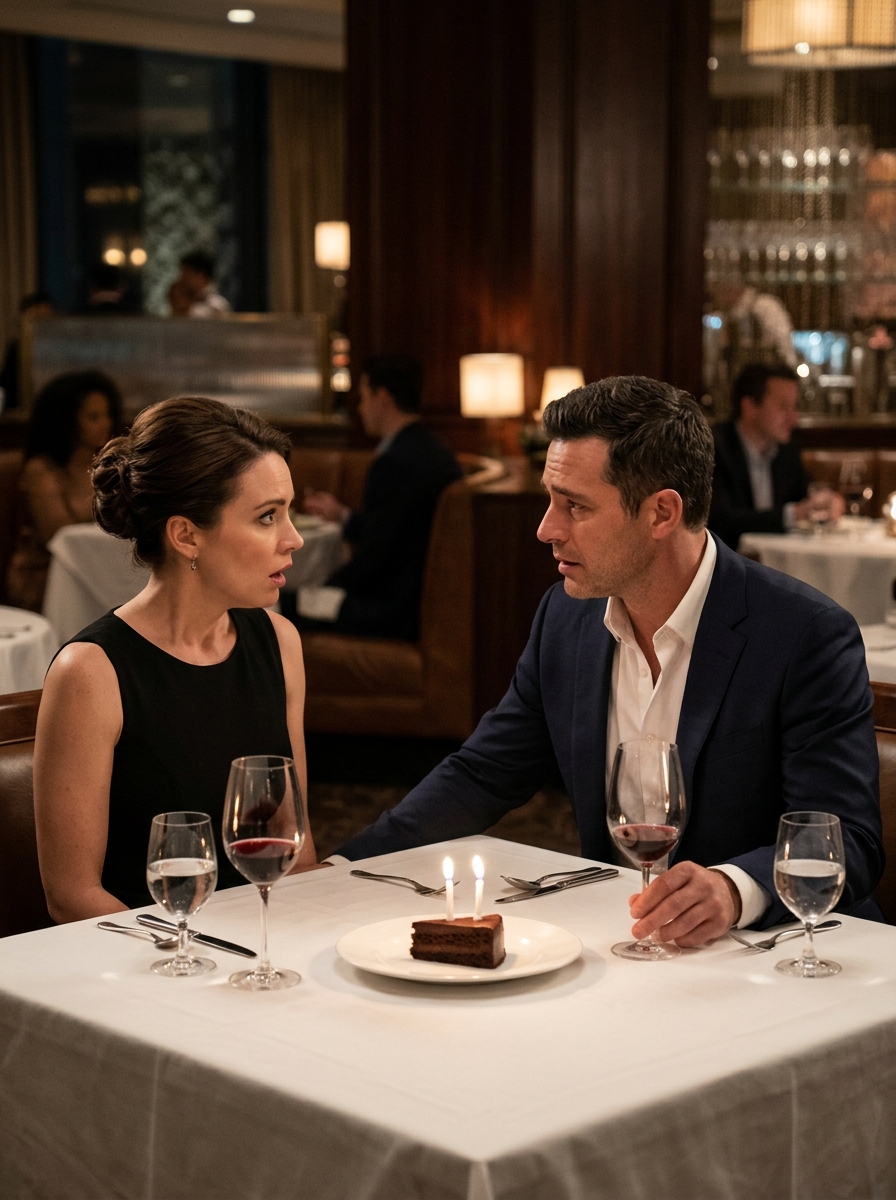
At our tenth-anniversary dinner, I suggested we skip dessert and go upstairs. My husband set down his wine and said, “Tessa, I stopped initiating because every time we’re intimate, you look like you’re waiting for me to finish wanting you.”
For eight months, Adrian had barely touched me beyond a careful kiss goodbye. I had blamed his work, my work, age, the softening of my body, and eventually the possibility of another woman.
I had become an investigator in my own marriage. I checked whether he smiled at his phone. I noticed when he showered. I counted the evenings he spent restoring old receivers in his workshop after dinner. I hated myself for it, but suspicion was easier to hold than humiliation.
That night, I’d tried to solve the problem.
I wore the dark green dress he once said made me look dangerous. I booked a room above the restaurant. I put the overnight bag in the trunk without telling him and spent dinner being a brighter, lighter version of myself.
Then he said I disappeared when he touched me.
“You could have told me,” I said.
“I didn’t know how.”
“You’re forty-one. You use words professionally.”
“I repair audio equipment professionally.”
“Then write it on a label.”
He almost smiled, which made me furious.
The waiter appeared with two anniversary candles stuck into a slice of chocolate cake. He congratulated us. Adrian thanked him. I stared at the thin flames until the waiter walked away.
“How long?” I asked.
Adrian’s thumb moved against the edge of his napkin. “The first time I was sure was January.”
Nine months earlier.
“We were in bed,” he continued. “You kept looking at the smoke detector. I stopped, and you asked why. I said you seemed somewhere else.”
“I was tired.”
“You said, ‘It’s fine. I can keep going.’”
I remembered saying it. I also remembered the tiny dark gap between the smoke detector and the ceiling. I had wondered whether dust could trigger a false alarm. I’d planned an email to a vendor. I’d counted backward from twenty.
Anything to stay useful without being present.
Adrian looked down at the table. “I heard the word ‘can,’ and suddenly I understood that was what you’d been giving me. What you could tolerate.”
“So you stopped touching me.”
“I stopped initiating sex.”
“You stopped everything.”
“That isn’t fair.”
“No?” My voice sharpened. “When was the last time you kissed me without looking like you were checking a box?”
He leaned back. “When was the last time I could trust that you wanted me to?”
There it was: the trap we had built together. I needed him to approach me so I could feel desired. He needed me to seem desirous before he could risk approaching. Between us sat eight months of untouched skin and misread silence.
Then Adrian asked whether I remembered an argument eighteen months earlier.
I remembered every word.
That week, I had turned him down three times. Once because I had a migraine, once because I had an early meeting, and once because his hand on my hip made me feel cornered before I even understood why.
On the third night, he followed me into the laundry room and said, “I don’t know how long I can stay in a marriage where I feel unwanted.”
At dinner, Adrian closed his eyes when I repeated the sentence.
“I was hurt,” he said. “I wasn’t giving you an ultimatum.”
“But I heard one.”
His eyes opened.
After that fight, I had stopped asking whether I wanted intimacy. I asked whether I could manage it. Usually, I could. I knew how to lean in, how to respond, how to prevent an evening from becoming another referendum on our marriage.
Adrian pushed his chair away from the table.
“I thought things got better,” he whispered.
“They got quieter.”
He looked devastated, but I was angry too. He had made desire sound like the rent required to stay married. Then, when he finally noticed what paying it cost me, he had withdrawn without explanation and left me to invent reasons.
“Then answer one thing,” he said. “If I could promise I wouldn’t leave because you said no tonight—or next week—would you still choose this marriage? Not the performance. Me.”
I opened my mouth and discovered I had no honest answer ready.
Adrian waited.
Finally, I said, “I don’t know how to answer without figuring out what answer you can survive.”
His face folded, not dramatically, just enough for me to see how tired he was.
“That,” he said softly. “That’s what scares me.”
***
We did not go upstairs.
I canceled the room from the restaurant lobby while Adrian retrieved the car. The woman at reception asked if anything had been unsatisfactory. I said our plans had changed.
In the car, rain tapped against the windshield. Adrian drove with both hands fixed at ten and two, as if taking a licensing exam.
“I do choose you,” I said after six blocks.
He kept his eyes on the road. “You choose keeping me.”
“What’s the difference?”
“I don’t know anymore.”
It was a cruel answer because it was honest.
At home, my overnight bag remained in the trunk. I went upstairs and removed the green dress. When Adrian entered the bedroom, I was standing in my slip, and for one disorienting second I thought he might cross the room and touch me.
He looked away.
I grabbed my robe. “You don’t have to act like I’m dangerous.”
“You’re not.”
“Then look at me.”
He did. His expression contained affection, grief, and enough restraint to make me feel exposed.
“If I come over there,” he said, “you’ll let me.”
“You’re my husband.”
“That isn’t the same as wanting me.”
“What do you want me to do, Adrian? Throw you against the wall so you feel sufficiently adored?”
“I want you to stop proving things with your body.”
The sentence landed so hard that I sat on the edge of the bed.
He sat in the armchair across from me, leaving a deliberate stretch of carpet between us.
“We need help,” he said.
“I can fix this.”
“That’s what you’ve been doing.”
“I mean differently. We can take a trip. We can go out more. I can talk to my doctor. Maybe it’s hormonal.”
He shook his head.
Every suggestion I offered made his shoulders rise higher. A plan was how I showed love. A plan was also how I avoided terror. If I could turn the problem into appointments and reservations, I would not have to ask whether desire had become collateral damage in our marriage.
“I’m not saying nothing physical can ever happen again,” he said. “I’m saying we can’t keep doing what we were doing.”
“You already decided that eight months ago.”
He flinched.
“You’re right,” he said. “I made that decision alone. I told myself I was protecting you, but I was protecting myself from having to ask. That wasn’t fair.”
His apology took some of the heat out of me.
We agreed to contact a therapist. We also agreed that until we understood what had happened, neither of us would initiate sex. Other touch had to be asked for plainly, with no silent expectation that it would become something else.