His Wife Kept Saying Yes—Until He Heard the Voicemail Behind Her Silence
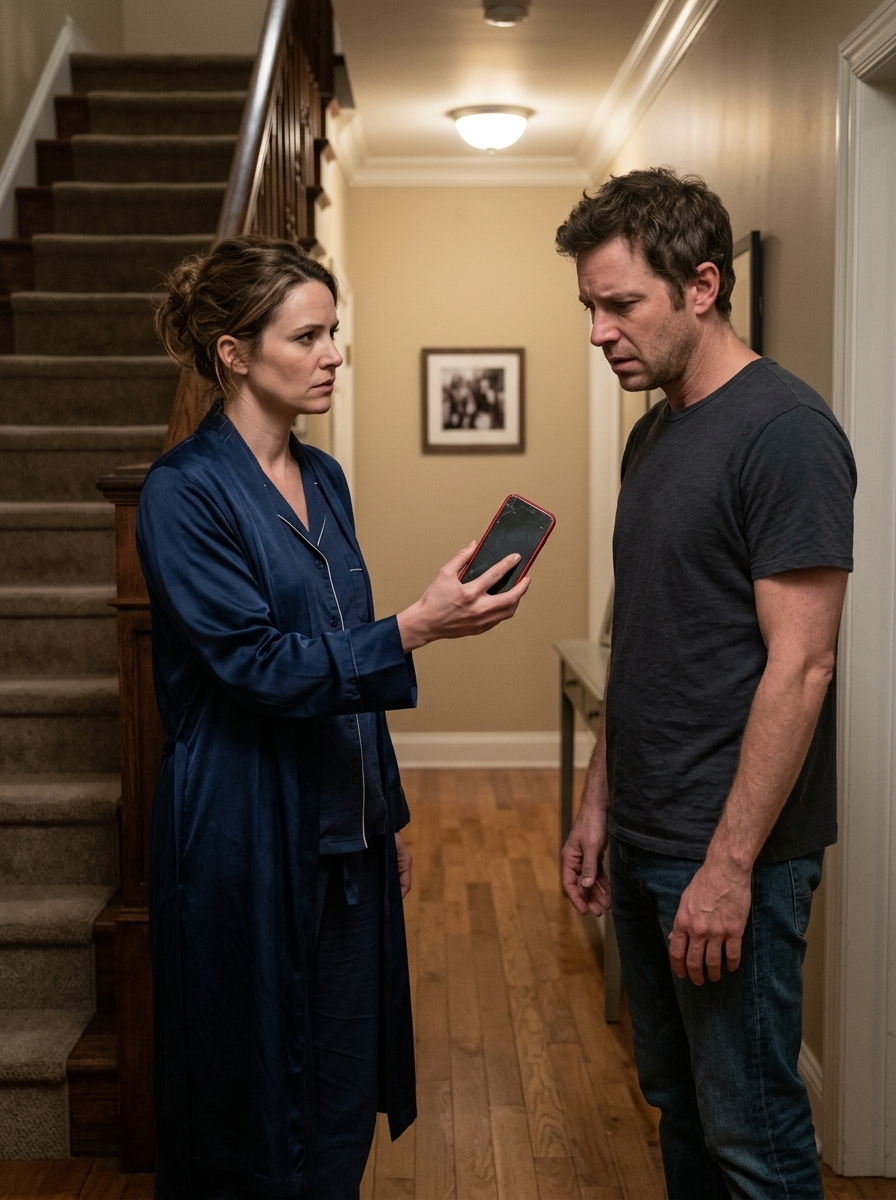
At 9:17 on the first anniversary of her sister’s death, Camille locked both phones in the kitchen and asked her husband to come upstairs.
Jonah said no.
“Not tonight?” she asked.
“Not like this again.”
Camille stood at the foot of the stairs in the blue robe he used to love. She had spent twenty minutes getting ready and another ten pretending she had not. Now she felt foolish, almost costumed.
For seven months, Jonah had barely initiated a kiss. She had blamed grief, then her distractedness, then the ten pounds she had gained surviving casseroles and condolence wine. She had even blamed the new haircut he claimed to like but never touched.
At thirty-eight, she finally asked the question she had rehearsed but never risked.
“Do you still want me?”
Jonah’s face tightened. “That isn’t why I stopped.”
“Then why?”
“Because every time we were intimate, you looked at the smoke detector and left.”
“I was right there.”
“Your body was.” His voice broke on the last word. “You would say yes, and I’d let that be enough because I was scared to ask what your face was telling me. Your hands went cold. You counted the flashes on the ceiling. Sometimes you asked if I was finished before I’d even—”
He stopped, looking sick.
Camille pulled the robe closed. “So you’ve been monitoring me?”
“I’ve been missing you while touching you.”
She wanted to slap the sentence away. Instead, she said, “I never told you to stop.”
“I know. That’s what scares me.”
The kitchen clock clicked over to 9:18.
A year earlier, her older sister Tessa had called at that exact minute. Camille had seen the name glowing beside the bed and turned the phone facedown.
Forty-three minutes later, a state trooper called.
Jonah took one step toward her, then stopped himself. “I should have said something months ago. I should have stopped sooner. But I can’t keep pretending endurance is closeness.”
“Are you leaving me?”
“I don’t know how to stay married if we keep lying about what happens in that room.”
Camille stared past him toward the kitchen. Then she crossed the tile, unlocked the bottom drawer beneath the dish towels, and took out a cracked red phone Jonah had never seen.
“You want to know where I go?” she asked.
Her thumb hovered over the only saved message.
“Listen to what I chose not to answer.”
She pressed play.
For two seconds, there was only the hollow sound of a moving car. Then Tessa’s voice filled the kitchen.
“Cam? Hey. Don’t be mad.”
A turn signal clicked in the background.
“I did something stupid. I thought I was okay to drive, but I’m not. Can you come get me? Or call me and tell me not to be an idiot. Just—please pick up.”
A breath. A muffled curse.
“Never mind. I’ll figure it out.”
The message ended.
Jonah did not move.
Camille held the phone so tightly the old case creaked.
“You told me she didn’t leave a message,” he said.
“I lied.”
“Why?”
“What was I supposed to say? Everyone kept telling me there was nothing I could have done.”
His gaze returned to the phone. “But she asked you to come.”
“Yes.”
Tessa had been forty-two when she died. She was funny, erratic, generous, exhausting, and capable of turning a minor inconvenience into a five-person rescue operation. For years, Camille had picked her up from bars, paid her overdue electric bill, and left work to solve emergencies that sometimes turned out not to be emergencies at all.
Three weeks before the crash, Camille had finally drawn a line.
No more late-night rescues. No more lending money. No more taking responsibility for whether Tessa got home safely after drinking.
Tessa had called her controlling. Camille had called Tessa selfish. They had not spoken after that.
Then the phone lit up beside Camille and Jonah’s bed.
Camille had glanced at the name and said, “She can figure out one night without me.”
Jonah had kissed her shoulder and said, “Good.”
Now he leaned against the counter as if his knees no longer trusted him.
“I said good,” he whispered.
“You didn’t know.”
“Neither did you.”
“She left a message.”
“We hadn’t heard it.”
“I saw her name.” Camille’s voice rose. “I knew she only called that late when something was wrong.”
“You also knew she called when she lost her charger or wanted you to fix a fight with her landlord.”
“So that’s the defense?”
“I’m not defending it.”
“Everyone defends it. ‘Tessa was an adult. Tessa made a choice. You couldn’t have known.’ They say it like the right sentence can make the phone stop ringing.”
Jonah rubbed both hands over his face. He was forty-one, broad-shouldered and usually impossible to hurry. That night every movement looked uncertain.
“I wish you had answered,” he said.
The words landed harder than blame.
Camille swallowed. “Finally.”
“Finally what?”
“Someone said it.”
“I also wish she hadn’t driven. I wish she had called a cab, or the restaurant, or me. I wish she had stayed in the parking lot until morning. There are twenty decisions inside that message, Cam. Not all of them were yours.”
“But one was.”
“Yes.”
She stared at him. She had expected acquittal or conviction. He was giving her neither.
Jonah looked toward the stairs. “Is that why you kept asking me to come upstairs?”
“I wanted us back.”
“Were you with me?”
“I said yes.”
“That’s not what I asked.”
Camille turned away.
In the first weeks after the funeral, closeness had seemed like one of the few things death had not confiscated. Jonah’s warmth, the familiar weight of his attention, the private language of a marriage nine years old—she had reached for all of it.
Then the smoke detector had blinked.
Seven red pulses, a pause, seven more. At some point she had begun counting. Behind every number was Tessa’s message.
Please pick up.
Camille would wait for the moment to end, then go into the bathroom, lock the door, and play the voicemail once. Only once. It was the price she charged herself for having wanted anything on the night her sister died.
“If I stopped being your wife,” she said, “then the crash took this, too.”
“So you forced yourself to keep going.”
“I didn’t force anything.”
“What would have happened if you’d said no?”
Her answer came too quickly. “You would have gotten tired of waiting.”
“I stopped initiating seven months ago.”
“And every day since then I’ve wondered what was wrong with me.”
“I was trying not to hurt you.”
“You did hurt me.”
“I know.”
The absence of a defense made her angrier.
Jonah pointed toward the red phone. “How often do you listen to that?”
She did not answer.
“Camille.”
“When I need to.”
“What does that mean?”
Her silence told him enough.
He looked at the robe, the locked phones, the clock above the stove.
“You planned this for 9:17.”
“I thought if we could get through the same minute—”
“Get through it?”
“Replace it.”
His expression changed from confusion to grief.
“You were going to make us reenact that night.”