My Parents Missed Graduation—Then My Binder Exposed What They Planned to Take
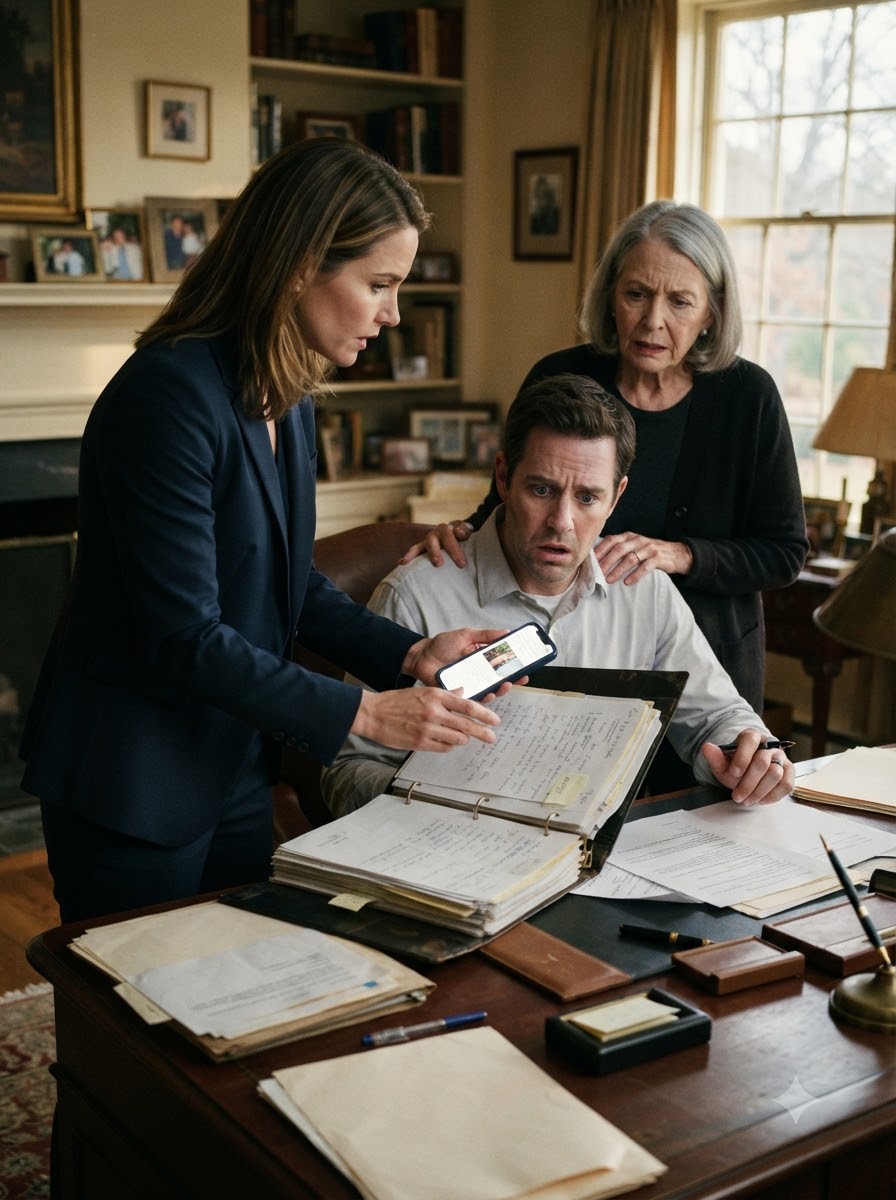
The first page was a printed copy of my graduation RSVP.
My mother’s name was beneath mine. Beside it, in her neat blue handwriting, she had written: Seats 12 and 13. Confirmed.
Dad’s name was there too.
I placed the page in front of him.
He glanced at it, then looked away.
“Claire, this is not relevant to the discussion.”
“It is the beginning of the discussion.”
Mom lowered herself into the chair beside Isabella. “Darling, we explained why we couldn’t attend.”
“You explained that Isabella needed help choosing bathroom tile.”
“It was a complicated decision,” Isabella said.
She did not look up from her phone.
I opened the binder again.
Behind the RSVP was a screenshot of Mom’s text, timestamped 10:14 a.m. on graduation day.
We could not make it. Isabella needed help picking tile for the new house.
Below it was another message, sent two minutes later.
It is just a data degree, Claire. Do not make a fuss.
Dad’s jaw tightened.
“I was trying to put things in perspective,” he said.
“You were trying to make sure I knew it didn’t matter.”
“Your degree did not have an obvious commercial application.”
“Neither does Isabella’s bathroom tile.”
Isabella’s head snapped up.
Mom’s expression hardened. “There is no reason to be insulting.”
“No,” I said. “There is a reason to be accurate.”
For years, accuracy had been the only defense I had.
In the Stevens household, feelings were dismissed as weakness, but numbers were treated like law. So I had learned to keep records. I tracked every dollar I earned, every bill I paid, every promise they made and broke.
I had not started building the binder for revenge.
I had started it because living with my family made me doubt my own memory.
When Dad told me he had never agreed to help with tuition, I had saved the email where he promised to cover my final semester.
When Mom claimed I had been invited to family vacations, I had saved the messages showing the invitations were sent the night after the flights were booked.
When Isabella borrowed my car and returned it with a damaged bumper, then told everyone I had caused the accident myself, I had saved the insurance report.
The binder was not dramatic when I built it.
It was practical.
A private record of reality.
Now it sat on my father’s polished table like an explosive device.
He leaned back. “You are upset. That is understandable. But emotion is not a basis for financial planning.”
“I agree.”
I turned to the next section.
The mechanic’s estimate.
Three hundred and eighteen dollars for an alternator replacement on my ten-year-old sedan. The date was five days before graduation. Beneath it was the email I sent Dad.
I only need a short-term loan. I can repay you after commencement.
His response had arrived twenty minutes later.
I am not funding a failing enterprise.
Then, lower on the page, I had written the exact balance in my checking account after I paid the mechanic: $412.67.
Dad stared at the printout.
“That was years ago.”
“It was five days ago.”
For the first time, Isabella stopped pretending to be bored.
Mom’s fingers tightened around her handbag. “You are making a spectacle out of a misunderstanding.”
“No. You made a spectacle out of my absence. I am documenting it.”
Dad reached for the binder.
I placed my hand over it.
His eyes lifted to mine.
“Do not touch it.”
The room went silent.
I had said those words to my father perhaps three times in my life. The first was when I was nine and he tried to take a sketchbook from me because he thought drawing was a distraction. The second was at twenty-two, when he attempted to open a letter from my university. The third was now.
He slowly withdrew his hand.
“Claire,” he said, “you are making a serious mistake by turning family matters into a hostile negotiation.”
“This is not a negotiation.”
He glanced at the contract folder beside me. “Then what is it?”
I took out a copy of my Vanguard Cybernetics offer.
“I am here because you summoned me to discuss controlling my future. I came to tell you that you no longer have any authority over it.”
Mom’s face changed when she saw the compensation figure.
She read it twice.
Isabella leaned across the table. “That can’t be real.”
“It is.”
“Two million dollars?”
“More than that, depending on performance.”
Dad picked up the pages. His eyes moved rapidly over the terms. I watched the calculations begin behind them: taxes, investments, leverage, introductions, percentages.
“Executive appointment,” he said. “This title is vague.”
“It is clear enough to the company that hired me.”
“Vanguard is a large organization. They can afford to overpay for publicity.”
“David Thorne called because my research identified a vulnerability their security team had been investigating for six months.”
Dad’s mouth flattened. “You are exaggerating your role.”
I took out the financial news announcement, then the email from Vanguard’s general counsel confirming my appointment and the restrictions attached to my work.
I did not show them the confidential technical details. I had signed agreements, and unlike my father, I understood that access was not ownership.
Dad dropped the pages onto the table.
“Who negotiated this contract?”
“I did.”
“Who advised you?”
“No one in this room.”
Mom’s voice softened abruptly. “Sweetheart, you should have told us. We could have helped you protect yourself.”
“You weren’t available.”
“We were busy with Isabella.”
The words came out before she could stop them.
Isabella glared at her.
Dad stood. “Enough. This meeting is becoming unproductive.”
“It has barely begun.”
I opened the next tab.
This section was labeled FAMILY FINANCIAL RECORDS.
Dad looked at the heading and went still.
I had not obtained anything illegally. The records came from documents left in the home office, emails accidentally forwarded to me, and files Isabella had shared when she asked me to “clean up” her business spreadsheets. I had also requested public corporate filings, property records, and court documents.
My family had never considered me a threat because they assumed I was too insignificant to notice anything.
The first document was a spreadsheet showing payments from Harrison Stevens Consulting to Isabella’s event company over four years.
The total was $1.84 million.
The payments were described as marketing services, strategic partnerships, and client entertainment.
But Isabella’s company had produced no meaningful profit. Her bank statements, which she had once sent me by mistake, showed that most of the money immediately went toward personal expenses: the SUV, the renovation of her house, designer clothing, resort charges, and private school tuition for her son.
Dad had been quietly covering the losses.
That alone was not my business.
What made it my business was the next set of documents.
A series of emails between Dad and his chief financial officer discussed disguising the transfers as legitimate business expenses. In one message, the CFO wrote:
If the payments continue at this level, we need stronger documentation in case of audit.
Dad had replied:
Use Claire’s research work as a market analysis line item where possible. She will not understand the accounting structure and is unlikely to ask questions.