My Parents Sold Grandpa’s House—A General Recognized the Ring He Left Me
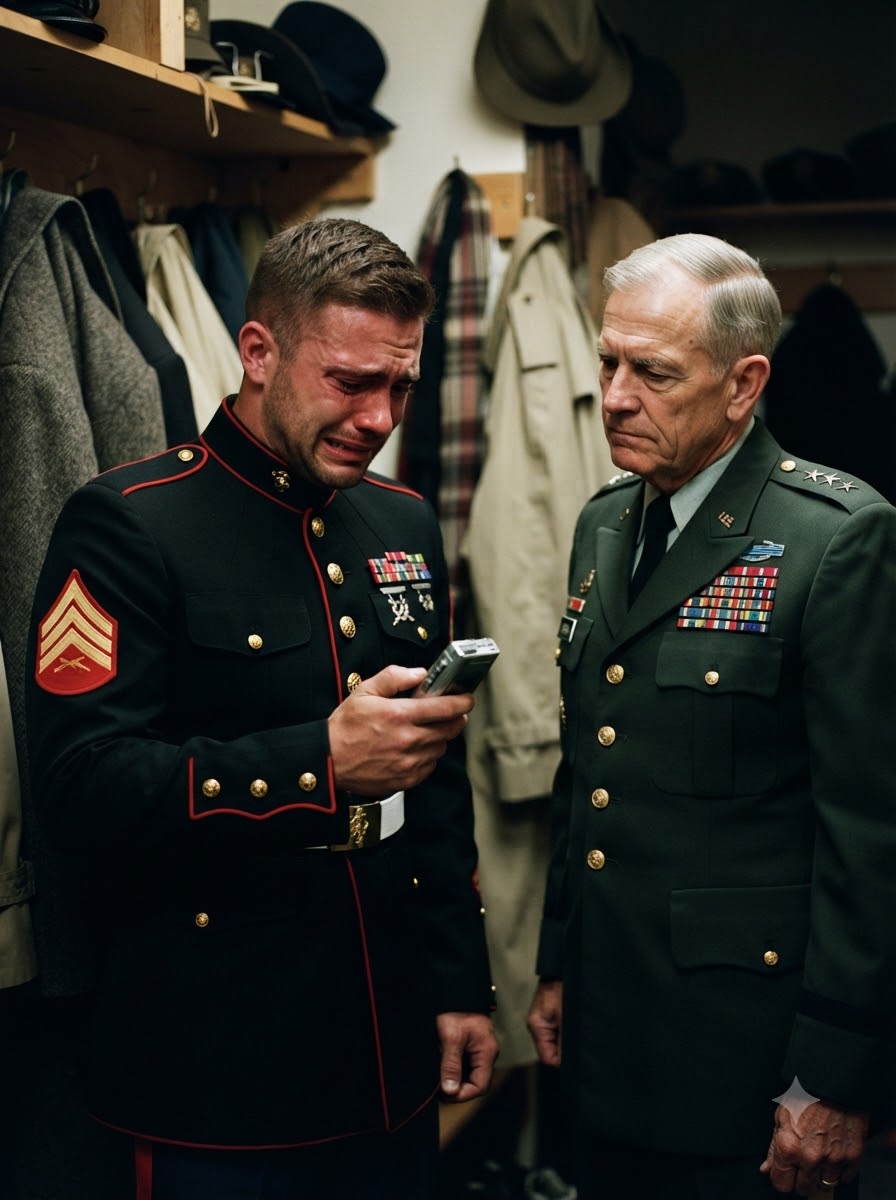
The first thing my mother said when I called from the hospital was, “Don’t let them make this expensive.”
Not How is he? Not Is he awake? Not I’m coming.
The county hospital had called me because my grandfather had collapsed alone in his kitchen, and because the nurses had found my number written on the back of an old grocery receipt in his wallet. I was stationed two states away with the Marine Corps. My mother lived twenty minutes from him.
“I can’t leave work,” she said.
“It’s ten at night.”
“Your father’s asleep.”
“Wake him up.”
She exhaled sharply, as if I were the one creating the problem. “Thomas has always been dramatic. He probably forgot to eat again.”
“He’s in intensive care.”
That silenced her for three seconds.
Then she said, “Well, your brother can’t go. He has an early shift.”
I stood in the barracks hallway with my duffel still over one shoulder, staring at the rain sliding down the window.
“Mom,” I said, “he may be dying.”
“He’s old.”
That was how my grandfather became an emergency to me and an inconvenience to everyone else.
I took emergency leave that night. By dawn, I was driving through gray Ohio rain, heading toward the little town where Thomas Hail had lived for forty-three years in a narrow, weather-beaten house at the end of Willow Street.
The hospital room smelled of disinfectant, plastic, and stale coffee. Machines blinked beside him. His hands looked almost translucent against the white sheet.
When I walked in, his eyes opened.
For a moment, he seemed confused. Then his face softened.
“Guess you’re the one who remembered me,” he whispered.
I sat beside him and took his hand. His fingers were cold.
“Mom and Dad are coming,” I lied.
He looked toward the window.
“They won’t,” he said.
He didn’t sound angry. That was worse. He sounded like a man who had stopped expecting anything from them years ago.
I called my mother from the hallway. She answered on the fourth ring.
“I’m here,” I said. “You need to come.”
“What did the doctor say?”
“That he’s not doing well.”
“Is he conscious?”
“For now.”
“Then tell him I love him.”
“You tell him.”
“Don’t start.”
I pressed my forehead against the wall. “He’s your father.”
“He hasn’t acted like a father in years.”
I almost laughed. Grandpa had paid for her first apartment. He had watched my brother while she worked nights. He had repaired the roof after a storm destroyed half of it. But he had never been affectionate in the way my mother wanted. He didn’t make speeches. He didn’t attend every birthday. He didn’t explain himself.
To her, that meant he had failed.
To me, it meant he had hidden something.
Grandpa died two days later.
He went quietly at 4:17 in the morning, while I sat beside him with my hand around his. He opened his eyes once, but he couldn’t speak. His gaze moved to the ring on his right hand, an old silver band with a small black symbol etched inside.
I had seen him wear it every day of my life.
He touched it with his thumb.
Then he looked back at me.
“Remember,” he breathed.
It was the last word he ever said.
When I called my mother, she sighed.
“At least he’s not suffering anymore.”
That was all.
No one came to the hospital. No one helped with the funeral. My brother, Daniel, texted that he was “buried at work.” My father sent nothing.
The funeral was held three days later in a small church with faded carpet and a leaking gutter. There were five people in attendance: me, the priest, the neighbor who had found Grandpa, an elderly woman who had known him from the hardware store, and the funeral director.
The casket was plain wood. I couldn’t afford the polished one my mother had insisted would be “more appropriate,” and she hadn’t offered a dollar.
After the service, I went to Grandpa’s house to sort through his belongings.
My mother had given me one instruction.
“Don’t take anything valuable,” she said over the phone. “The house is going on the market.”
“He just died.”
“Exactly. We can’t leave it sitting there.”
We.
She had already decided that his house belonged to her, even though Grandpa had never mentioned leaving it to her. She had also told me not to bother looking for documents because “Dad never had anything important.”
The house felt smaller without him.
His coat still hung by the door. A chipped blue mug sat beside the sink. The living room clock had stopped at 9:12. On the television, a VHS tape was frozen on a black screen.
I went through drawers slowly, not searching for money, but for pieces of him.
In the kitchen, I found his grocery lists, written in careful block letters. In the garage, I found tools labeled with dates. In the bedroom closet, I found three old military jackets with their insignia removed.
The ring was in the top drawer of his nightstand, wrapped in a faded handkerchief.
I slid it onto my finger.
The inside was engraved with a symbol I didn’t recognize: a broken circle crossed by three narrow lines.
When I was nine, I had asked Grandpa what it meant.
“It reminds me who I am,” he had said.
I had assumed that meant he was sentimental.
Now, standing alone in his bedroom, I wondered if it meant something else.
Three weeks later, my mother sold the house.
She didn’t tell me until after the closing.
“Your grandfather had debts,” she said. “We had to move quickly.”
“What debts?”
“Medical bills. Property taxes. Repairs.”
“Where’s the paperwork?”
“Why are you interrogating me?”
“Because you sold his house without telling me.”
“You had no legal say.”
That was true. I had no legal say. But I had a feeling she knew something she wasn’t telling me.
I returned to base with the ring still on my hand.
I wore it while training. I wore it while eating. I wore it to sleep. I didn’t know why. It was the last physical thing Grandpa had left me, and the weight of it became strangely comforting.
A month after his death, I was invited to a formal military ceremony honoring veterans and service members. I almost declined. Then I remembered Grandpa’s face in the hospital and decided to wear the ring.
The ceremony took place in a government hall lined with flags and polished wood. Officers moved through the crowd. Veterans stood beside families. A brass ensemble played softly near the stage.
I was speaking with a captain when a general approached from behind him.
The general was tall, silver-haired, and severe. I recognized him as General Everett Vale, a highly decorated officer whose name appeared often in military publications.
He glanced at my uniform, then at my hand.
He stopped.
The color drained from his face.
“Where did you get that?” he asked.
His voice was so quiet I almost didn’t hear him.
I looked down at the ring. “It belonged to my grandfather.”
“What was his name?”
“Thomas Hail.”