I Paid Clara for Six Years—Her Sealed Letter Exposed Luis’s Lie
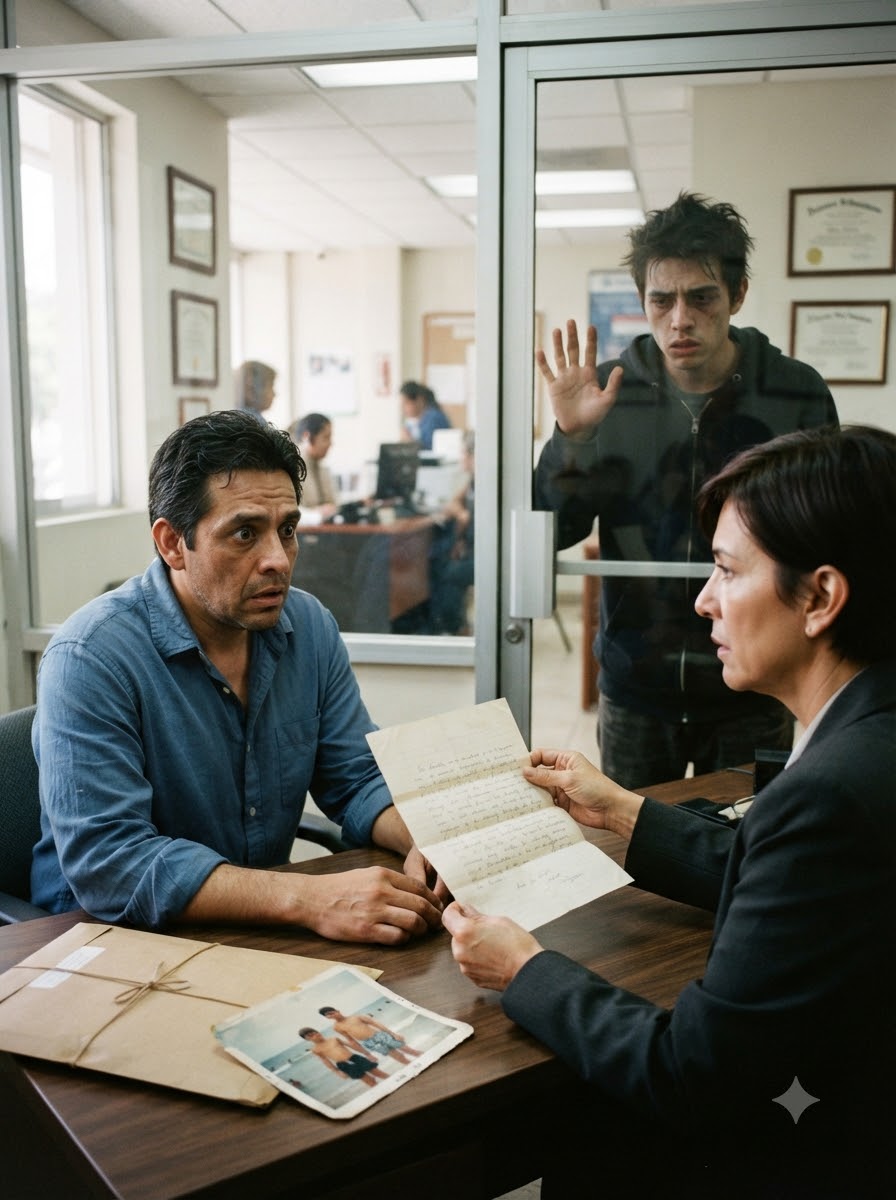
The bank representative was still speaking when Luis lunged for my phone.
I stepped backward into the street, keeping the call on speaker. His fingers grazed my wrist but missed the phone. Teresa, the elderly woman across the road, shouted so loudly that a dog began barking behind the neighboring fence.
“Don’t touch him!”
Luis stopped.
For a moment, all three of us stood frozen beneath the hard afternoon sun: Luis on the path outside his mother’s renovated house, me in the street with my phone clenched in my hand, and Teresa gripping her garden hose like a weapon.
The woman from the bank repeated herself.
“She instructed us to release the folder only if you ever came here asking where your money went.”
Luis’s face had gone gray.
“What folder?” I asked.
“It is being held at the branch that managed the beneficiary account,” the representative said. “You will need to present identification. Because the account holder is deceased, there are restrictions regarding the funds, but the instructions are very clear.”
I stared at Luis.
“Your mother died two years ago?”
He looked toward the house.
The yellow paint was bright enough to hurt my eyes.
“Roberto,” he said, forcing his voice to remain calm, “you don’t understand what happened.”
“No,” I said. “I don’t.”
“You need to leave.”
“I’m going to the bank.”
His expression changed again. The irritation vanished. What replaced it was fear.
Not grief.
Fear.
I ended the call and walked toward my rental car. Luis followed me to the curb.
“You’re making a mistake,” he said.
“I’ve been making one for five years.”
“Marina asked you to help our family.”
“Marina asked me to take care of her mother.”
“And I did.”
“With my money?”
He spread his hands. “The money paid for the house. Repairs. Medical costs. Food. Things you never bothered to ask about.”
I looked over his shoulder at the new roof, the polished windows, the silver sedan, and the expensive watch on his wrist.
“You told me she was resting.”
“She was sick.”
“You told me she couldn’t come to the door.”
“She couldn’t.”
“You told me nothing.”
Luis lowered his voice.
“Because every time you called, you wanted to feel like a hero. You sent money and disappeared. Don’t pretend you were part of this family.”
The words struck deeper than they should have.
For five years, I had tried to respect their grief. After Marina died, I had gone back to work, paid the bills, slept in the apartment we had shared, and learned how to exist in a world where the person I loved was suddenly absent from every room.
Her mother had been one of the few people who still connected me to her.
Clara had cried when I first offered to send money. She had refused twice. The third time, she had said, “Only until I get back on my feet.”
I had promised.
The transfer left my account every first Tuesday at nine o’clock in the morning. I never missed one, even when my car needed repairs or my company cut overtime. Three hundred dollars was not enough to make me poor, but it was enough to keep a widow from choosing between medicine and electricity.
I had believed that mattered.
Now Luis was telling me it had been nothing more than vanity.
“I’m still going to the bank,” I said.
He stepped closer.
“If you go, you’ll destroy what’s left of this family.”
“You destroyed it when you used your dead mother to keep taking my money.”
His mouth tightened.
“You have no proof of that.”
“The bank has a folder.”
He glanced toward Teresa.
She had set down the hose. Two men from farther along the street had come out to watch. One of them held a phone at chest height, recording.
Luis saw them and retreated toward the door.
“Go back to the city,” he said. “We can discuss this like adults.”
“You had five years to discuss it.”
The door slammed behind him.
I drove to the bank branch mentioned by the representative. It was twelve minutes away, in a low concrete building beside a pharmacy. During the drive, I called my own bank and asked them to freeze the standing transfer.
The customer service agent put me on hold twice.
Then she asked whether I was certain.
I said yes.
At nine o’clock the following Tuesday, three hundred dollars would not leave my account.
For the first time in five years, that morning would belong to me.
The branch manager met me in a small office at the back. Her name was Helena Duarte. She had silver hair, a careful expression, and the kind of silence people use when they have already read something terrible.
She checked my identification.
“Roberto Alvarez?”
“Yes.”
“And you were married to Marina?”
“Yes.”
She placed a thick brown folder on the desk.
The first page contained a copy of Clara’s death certificate.
Date of death: October 14, two years earlier.
Cause: complications following a stroke.
I read the line three times.
Marina’s mother had been dead for twenty-six months.
For twenty-six months, I had sent money to a woman who could not receive it.
Helena turned the page.
“This is the bank’s account history,” she said. “The beneficiary account was originally in Clara’s name. About three months before her death, a power of attorney was filed.”
“Who filed it?”
“Her son, Luis.”
Of course.
I continued reading. The document allowed him to conduct ordinary banking, pay household expenses, and handle medical matters. It did not authorize him to conceal her death or continue accepting funds under her identity.
After Clara died, the account remained open.
The monthly transfers continued.
Luis withdrew cash from the account within hours of every deposit. Sometimes he used an ATM. Sometimes he transferred the money to another account. In the last year, almost all of the funds had gone to an account at a different bank.
The account belonged to Luis.
I felt something inside me becoming very still.
“How much?” I asked.
Helena handed me another sheet.
The total was printed at the bottom.
$18,900.
For a few seconds, I could hear only the air conditioner.
“That includes the money I sent after she died?”
“Yes.”
“And the bank knew she was dead?”
“We were notified by the county records office. Her account was flagged. But because the account had a power of attorney attached to it and the transfers were recurring, the system did not automatically stop them.”
“Why didn’t anyone call me?”
“You were not the account holder.”
That answer was legally correct. It still felt obscene.
Helena opened the folder again.
“There’s another document.”
It was a handwritten letter on three sheets of lined paper.
The writing was unsteady, but I recognized it immediately. Clara’s letters always leaned slightly to the right, as though each sentence were hurrying to reach the next.
Dear Roberto,
If you are reading this, then something has happened that I was afraid to name while I was alive.
I am not asking you to forgive me for accepting your help. You gave it freely, and I was grateful. But I need you to know that for the last year, the money has not been used for my care.