My Son-in-Law Said Grace Died—A Nurse Found His Forged Hospital Form
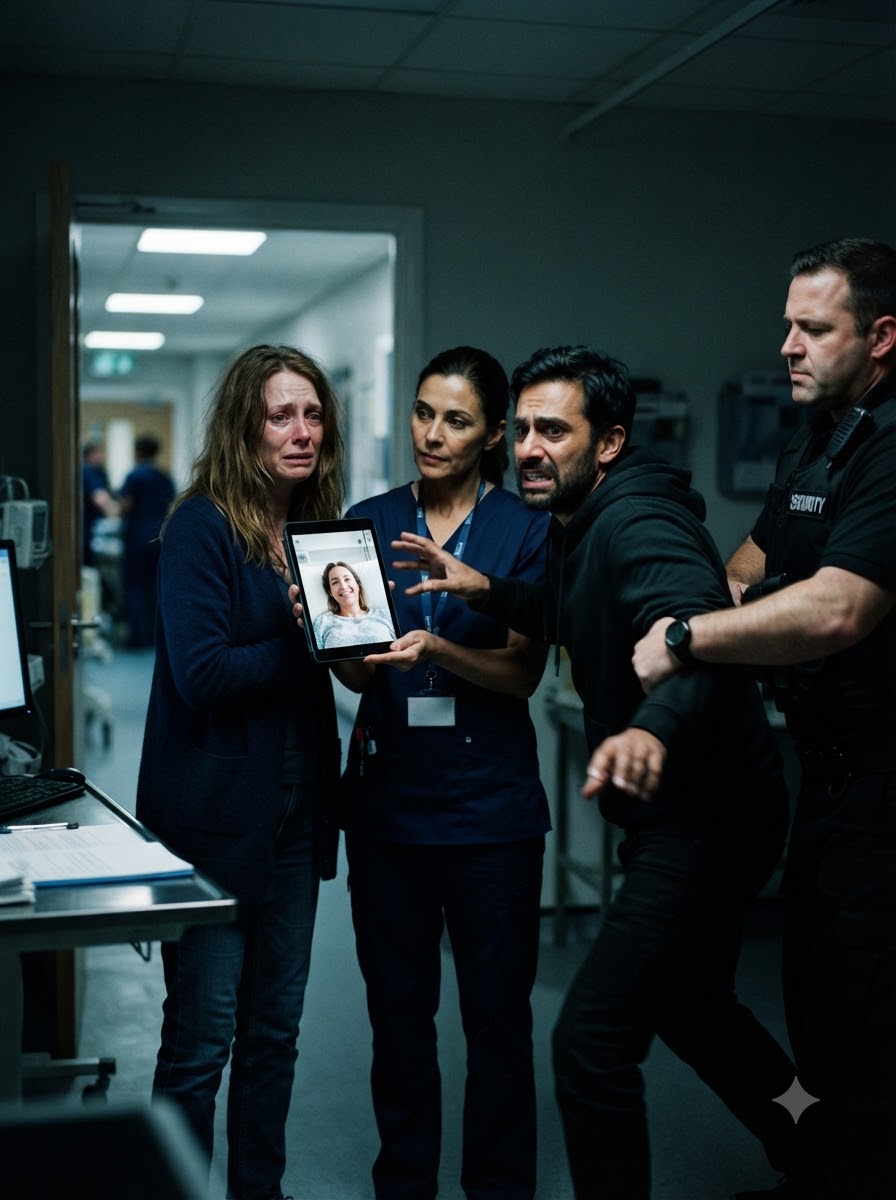
The first sign that something was wrong was not the phone call telling me my daughter was dead.
It was the way my son-in-law kept me from seeing her.
My name is Bernice, and I was fifty-nine years old that Friday afternoon, standing barefoot in my kitchen in Charleston with a wooden spoon in one hand and a phone in the other.
Rice pudding simmered on the stove. The house smelled of cinnamon and warm milk. Grace had called me that morning from Mercy General, laughing softly as she complained about the hospital breakfast.
“I’m fine, Mom,” she had said. “The contractions are still mild. You’ll be here before the baby arrives.”
I had spent thirty-seven weeks waiting for that baby, my first grandchild, as if I were waiting for the arrival of a new country.
Then, at 4:18 p.m., Ezekiel called.
His name appeared on the screen.
I answered with a smile.
What came through the phone was a ragged breath, followed by sobbing.
“Ezekiel?”
“Come to the hospital,” he said.
His voice broke.
“Now.”
I turned off the burner, though I never checked whether the flame had gone out. I grabbed my purse and ran from the house. I left the front door unlocked. I left the rice pudding boiling. I left my phone charger on the kitchen counter and drove to Mercy General with both hands locked around the steering wheel.
At every red light, I prayed.
I prayed for Grace. I prayed for the baby. I prayed for the doctors.
When I reached the emergency entrance, Ezekiel was sitting alone in a gray plastic chair. His white shirt was wrinkled, and his cheeks were wet.
He stood when he saw me.
I knew then that something terrible had happened.
But there was something else in his expression.
Not only grief.
Fear.
“Bernice,” he whispered.
I reached for him. “Where’s Grace? What happened?”
He came toward me and gripped both my shoulders.
“Your daughter didn’t survive the delivery.”
The words had no meaning at first.
They floated between us like smoke.
Then the floor seemed to tilt.
“No,” I said.
“I’m sorry.”
“No. I spoke to her this morning. She was fine.”
“There were complications.”
“Take me to her.”
His hands tightened.
“You don’t want to see her like this.”
I stared at him.
“Take me to my daughter.”
“Please,” he said. “Trust me. Remember her the way she was.”
That was when the grief split open, and something colder entered it.
A mother knows the difference between a man who is broken and a man who is afraid of being caught.
“What about the baby?” I asked.
His eyes dropped.
The answer came too quickly.
“He didn’t make it either.”
I made a sound I had never heard from myself. It seemed to come from somewhere below my ribs. My knees folded, and Ezekiel guided me into the chair.
A nurse appeared with a cup of water. Ezekiel thanked her before I could speak.
I asked what room Grace was in.
He hesitated.
“Two-twelve,” he said.
That was all I managed to hold on to.
Room 212.
I spent the next six hours moving through my house like a person trapped underwater. The front door remained open until a neighbor noticed it. The rice pudding had burned black against the bottom of the pot. Smoke clung to the curtains.
I sat in the dark living room and replayed the scene at the hospital.
His hands on my shoulders.
His plea.
The fear in his eyes.
Around midnight, I remembered something Grace had said four days earlier. We had been sitting in her living room, folding tiny yellow onesies while Ezekiel was supposedly at work.
She had rested both hands on her stomach.
“Mom,” she said, “do you think you ever let me be myself?”
I had laughed because I thought she was teasing me.
“I let you do plenty.”
“You let me do what you think is best.”
The sadness in her voice had unsettled me.
I had asked if something was wrong.
She smiled and changed the subject.
Now I wondered what I had failed to hear.
At 11:55, I put on black pants, a dark sweater, and flat shoes. I took my keys and drove back to Mercy General.
Years earlier, when my cousin had been hospitalized there, a nurse had shown me a service corridor used by delivery staff. The outer door was old and usually left unlocked.
I parked three blocks away and walked through the cold night.
The hospital after midnight had a different personality. The bright, crowded place I had left in the afternoon had become a maze of dim corridors and humming machines.
I went up the service stairs.
Second floor.
North hallway.
Room 212.
The nurses’ station sat just before the room. I waited behind a supply cart until one nurse left to answer a call and another walked toward the cafeteria.
Room 212 stood ajar.
No lights were on inside.
A gray wash from the hallway crossed the floor. I saw the bed, the lowered rail, the monitor with its screen dark.
A shape lay beneath the sheet.
I stepped inside.
For one second, I thought it was Grace.
Then the shape moved.
Not with the restless movement of a sleeping patient.
With a sudden, frightened jerk.
I pulled back the sheet.
A woman stared up at me.
Her face was bruised around one eye. Tape marked the inside of her elbow. Her wrists were red, as if restraints had recently been removed.
She opened her mouth, but no sound came out.
I recognized her.
Dr. Lila Moreno had delivered Grace’s first pregnancy checkup and had been on call for the birth. I had met her several times. She was not my daughter.
“Doctor?” I whispered.
Her eyes filled with terror.
I reached for the call button, but she grabbed my wrist.
“No,” she mouthed.
“Are you hurt?”
Her fingers tightened around mine.
“Don’t let him know.”
A sound in the hallway made us both freeze.
Footsteps.
I shoved the sheet back over her and stepped toward the wall just as the door opened.
Ezekiel entered.
He wore a dark jacket over the same white shirt. His hair was damp, as if he had showered. He carried a small black case.
He looked at the bed.
Then at me.
His face emptied of color.
“Bernice?”
I slapped him.
The sound cracked through the room.
He touched his cheek.
“What are you doing here?”
“Where is Grace?”
He glanced at the bed.
“Who is that?”
His eyes flicked toward Dr. Moreno for less than a second.
It was enough.
“You told me my daughter died.”
“She did.”
“That isn’t her.”
He stepped closer. “You’re upset. You’re not thinking clearly.”
“Where is my grandson?”
“Bernice, go home.”
“Where is Grace?”
He reached for my arm.
I backed away and pressed the call button.
His expression changed.
The fear I had seen earlier became anger.
“You have no idea what you’re doing,” he hissed.
Before he could touch me again, the door opened and two nurses rushed in. One was the nurse who had been at the station earlier. The other was a broad-shouldered man carrying a medication tray.