Grandpa Left Me His House—His Sealed Letter Exposed What My Brother Did
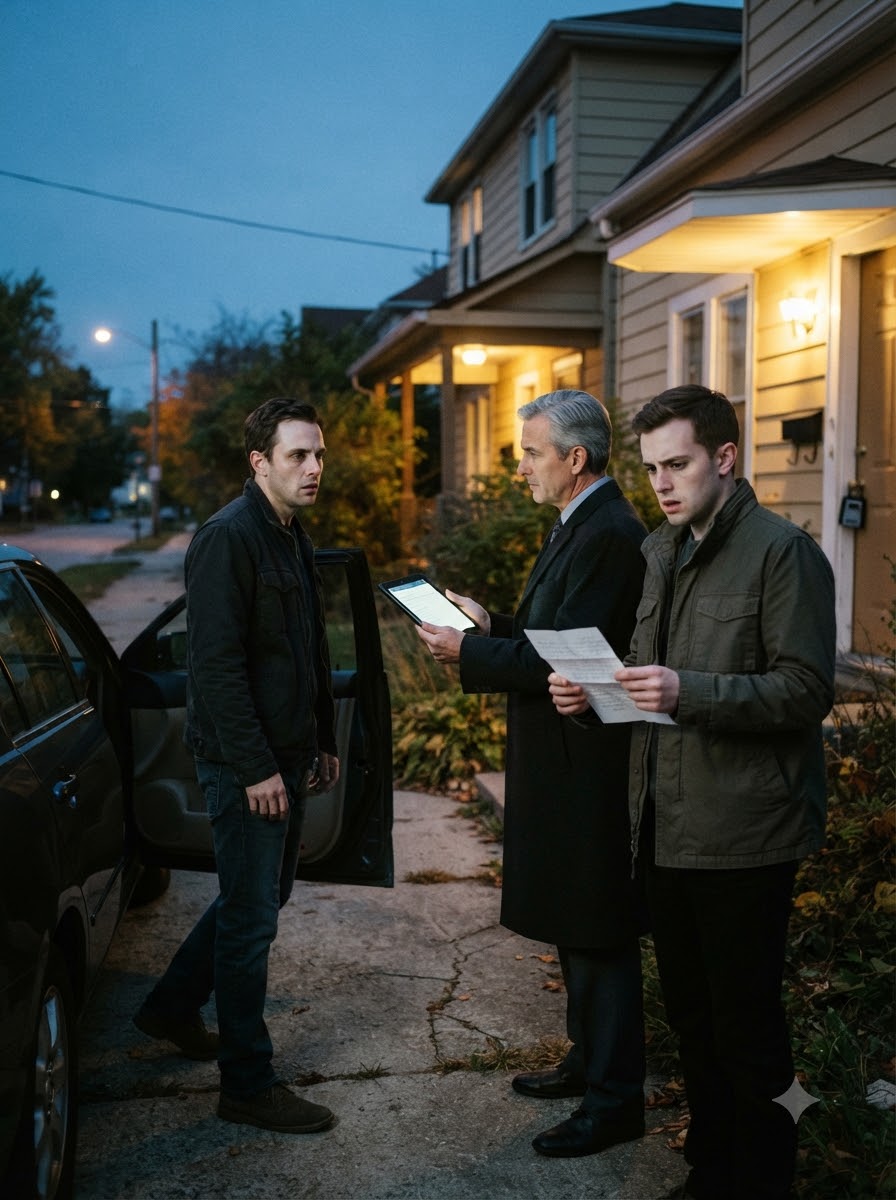
My mother didn’t say congratulations when my grandfather left me his paid-off house and a $320,000 investment account.
She said, “Your brother has kids, Aaron.”
The call came on a Tuesday morning. I was standing at the stove in my apartment, making eggs, when her name lit up my phone.
She didn’t say hello.
“Your grandfather’s attorney called. You’re getting a pretty big check.”
I turned off the burner. “What?”
“The house,” she said. “And some investment account.”
Then she paused.
“Derek’s only getting the boat.”
I heard the disappointment in her voice before I even understood the numbers. Then she said the sentence that explained my entire childhood.
“You know your brother could use that money more than you. He has kids, Aaron.”
I was twenty-nine. Derek was thirty-four, married, with three children. All his life he’d been treated as the family’s proof that everything had turned out right.
I was the son people remembered after the family photo had already been taken.
I didn’t argue with her. I hung up and called my grandfather’s attorney.
Mr. Vale asked me to come in the next morning. On his desk he had a thin leather folder, the deed paperwork, an account statement, and a sealed envelope with my name on it in my grandfather’s blocky handwriting.
The house on Cedar Lane was paid off. The account held just over $320,000.
Both were mine.
Derek got Grandpa’s fishing boat and a few personal items.
I stared at the page for a long time.
Mr. Vale didn’t smile. “Your grandfather was very specific.”
“About what?”
He rested one hand on the sealed envelope.
“About family pressure.”
That was all he would tell me until the remaining legal notices went out. The envelope stayed in his folder.
By Friday, Mom had called eleven times.
First she tried guilt. “Derek has three children.”
Then fairness. “You don’t need a whole house.”
Then history. “Your brother has always been there for this family.”
By Sunday, she’d moved on to blame. “You’re really going to let money destroy us?”
I almost laughed. She made it sound like the money had picked up the phone and started the fight on its own.
That night we had dinner at my parents’ house. Derek sat across from me with his wife, Jenna, beside him. My father stared hard at his plate the whole time.
Derek folded his hands like a man about to run a meeting.
“No one is saying you should get nothing,” he said. “We’re saying Grandpa clearly wasn’t thinking about the bigger picture.”
I looked at him. “The bigger picture being you?”
Jenna shifted in her chair.
Mom’s face tightened. “Don’t be childish.”
Derek leaned back. “Sell the house. Split the account. We can work out a fair percentage for you.”
A fair percentage.
Of what had been left to me.
I didn’t shout, and I didn’t insult him.
I said, “No.”
The room went silent.
Mom’s eyes filled up instantly, as if she’d been waiting for her cue. Derek’s face changed more slowly, and what replaced the friendliness was colder.
“You should think about what happens if this gets legal,” he said.
Three days later, a letter arrived from an attorney representing Derek.
It questioned my grandfather’s judgment. It suggested “undue influence.” It warned that a long dispute could get very expensive for everyone.
I’d seen my grandfather twice in the last year of his life. Derek knew that. So did Mom.
Nobody was supposed to believe the accusation. It was meant to wear me down.
I forwarded the letter to Mr. Vale, and he called me back five minutes later.
“Do not sign anything. Do not promise anything. And do not meet them alone about the property.”
His calm bothered me more than panic would have.
“What aren’t you telling me?”
Another pause.
“Your grandfather left more than assets, Aaron. He left a record.”
That night, Mom texted me:
If you force your brother to fight you, don’t expect this family to be here when it’s over.
I read it twice. Then I took a screenshot and put the phone face down on the table.
The next morning, a woman named Claire called from a real estate office.
“Hi, Aaron. I just wanted to confirm whether you’re still planning to list the Cedar Lane property.”
I sat straight up. “I’m not listing anything.”
Silence.
“I’m sorry?”
She told me she’d already toured the house. Someone had let her in. She’d taken the listing photos. A lockbox was already on the front door.
My grandfather’s house. My house.
I drove there without calling anyone.
The lockbox was real. It hung from the brass knob under the porch light, black and square, the most ordinary thing in the world. That was what made it sickening.
Through the front window I could see open drawers. A stack of Grandpa’s mail had been moved. A realtor’s measurement sheet sat on the kitchen counter.
I didn’t touch anything.
I called Claire back and asked her to email me every document she’d received: every name, every message, every note about access. She went quiet for a moment, and when she spoke again her voice had turned professional and careful.
“I’ll send everything,” she said. “Aaron, I think I need to speak with my broker.”
Then I called Mr. Vale.
He arrived forty minutes later with the same leather folder. He looked at the lockbox, then at me.
“Good,” he said quietly. “You didn’t remove it.”
“Good?”
“It’s evidence.”
He set the folder on the hood of his car and opened it. Inside was the sealed envelope. He handed it to me.
I broke the seal.
The first line was written in the same careful block letters I’d seen on birthday cards my whole life.
“Aaron, if they are pressuring you to give Derek what I left you, then I was right.”
Behind me, a car door slammed.
Derek had just pulled into the driveway.
He walked up fast, keys in his hand, with the smile he used on waiters and in-laws. The smile slipped when he saw Mr. Vale.
“Aaron,” he said. “Good. Let’s talk about this like adults.”
“You put a lockbox on my door.”
“We were getting ahead of things. Mom said you’d come around once you saw the numbers. The market’s hot. You’d have thanked me.”
“Mom had a key?”
He didn’t answer. That was answer enough.
Mr. Vale didn’t raise his voice. “Mr. Derek, I’d suggest you stop talking. Your nephew’s inheritance and your own are both affected by what you say next.”
Derek laughed, but it came out thin. “My own? I got a boat.”
“Read the letter, Aaron,” Mr. Vale said. “Out loud, if you’re comfortable.”
I was. I read it standing in the driveway.
“Eight months ago, Derek came to see me with a quitclaim deed. He’d filled it out himself. It would have transferred this house to him. He’d booked a mobile notary for that same afternoon. He told me it was ‘just paperwork, in case something happens.’ I told him no. He came back twice more. The third time, he brought your mother.