Minutes Before Mom’s Execution, My Little Brother Pulled Out My Dead Father’s Hidden Key
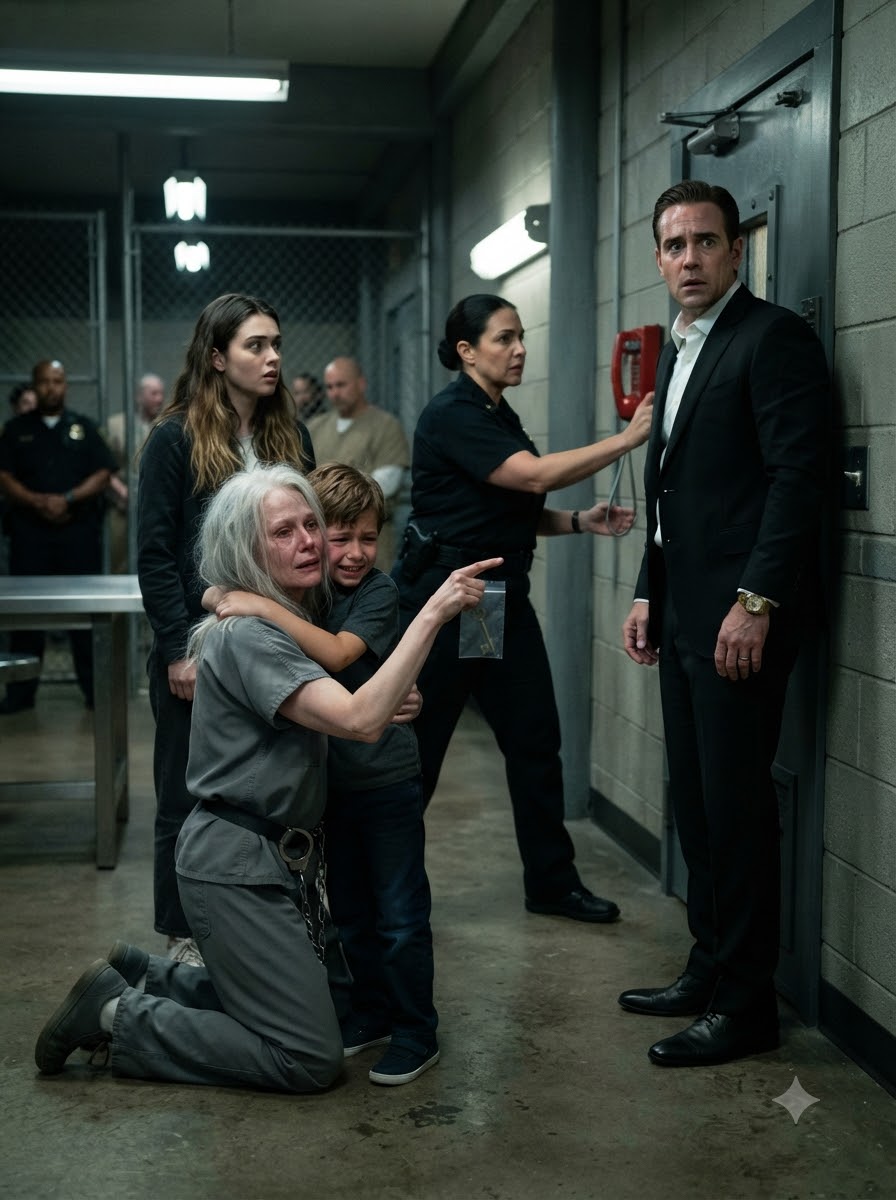
Warden Vance did not take his eyes off my uncle as he lifted the red emergency receiver off the cinderblock wall. His voice carried the cold, clipped authority of a man who had spent thirty years inside maximum-security walls, yet even his knuckles were white around the plastic handle.
“Get the Governor’s legal counsel and the State Attorney General on this line right now,” Vance ordered into the mouthpiece. “Tell the execution chamber to stand down. We have newly discovered physical evidence and a coerced minor witness inside holding room B.”
Across the narrow concrete room, Uncle Ray’s polite, grieving-brother mask shattered completely. For six years, he had worn tailored suits to family dinners, patted my hand whenever my father’s name was mentioned, and collected the rent and profits from everything my parents had spent twenty years building. Now, with the heavy steel door deadbolted behind him, he looked like a cornered animal.
“Give me that bag!” Ray lunged forward, his manicured hand clawing toward the crumpled Ziploc pouch in the warden’s left hand. “That belongs to my brother’s estate! You have no warrant to read private family papers!”
He didn’t get within three feet of the desk. Two corrections officers moved in unison, catching Ray by the lapels of his black suit and driving him chest-first against the painted concrete wall. His expensive gold watch struck the mortar with a sharp crack, the crystal spider-webbing across the dial.
“Touch the warden again,” the older guard said quietly against Ray’s ear, “and you’ll wait for the state police in belly chains.”
On the metal bench, my mother was shaking so violently that the iron links connecting her cuffs to her waist belt chimed against the steel seat. Her face—gaunt, pale, and lined from two thousand nights under fluorescent death-row lights—was buried in eight-year-old Matthew’s hair. She was sobbing without sound, her chained hands clutching the back of his blue knitted sweater as if letting go meant the floor would open up and swallow him.
I stood frozen between them and the warden’s desk, my heart hammering against my ribs so hard I could barely breathe. I looked down at the plastic bag Warden Vance had placed on the metal table while he spoke rapidly to the Attorney General’s clerk.
Inside the bag, wrapped around the shaft of the antique brass key, was a strip of yellowed masking tape. My father had written on both sides in his draftsman’s block letters using a waterproof black marker.
On the front side: *FOR CLARA OR MATTHEW IF WE ARE BOTH GONE. WALNUT WARDROBE — FALSE FLOOR PANEL.*
On the reverse side, pressed against the clear plastic, was a carbon-copy pink slip folded into a tight square. Through the bag, I could read the header stamped at the top: *STATE BUREAU OF INVESTIGATION — CONFIDENTIAL EVIDENCE INTAKE RECEIPT.*
Beneath the stamp, written four hours before the medical examiner estimated my father had died on our kitchen floor, were three lines of text that made the room tilt beneath my feet:
*Complainant: Thomas Miller.*
*Charge: Felony Commercial Arson, Insurance Fraud & Judicial Bribery.*
*Named Subjects: Raymond Miller and Superior Court Judge Victor Halstead.*
A cold sweat broke out across the back of my neck. Judge Victor Halstead. I knew that name better than my own social security number. Judge Halstead was the stern, silver-haired jurist who had presided over my mother’s five-day trial when I was seventeen. He was the judge who had ruled my mother’s alibi witnesses inadmissible. He was the judge who had blocked the defense from testing the unknown boot print on our back porch. And he was the judge who had personally signed the death warrant sitting on Warden Vance’s clipboard.
My mother hadn’t just been framed by a greedy brother-in-law. She had been railroaded into an execution chamber by the very judge my father had gone to the state bureau to expose.
“Clara,” my mother whispered.
I turned. Her red-rimmed eyes met mine. For six years, I had refused to visit this room. I had thrown her letters away unread. I had let her sit in a six-by-nine cage believing her own daughter hated her. The shame rose in my throat like bile, hot and suffocating.
I dropped to my knees on the concrete floor in front of her, wrapping my arms around both her and Matthew. The cold iron of her chains pressed against my forearms.
“I’m sorry,” I choked out, pressing my forehead against her shoulder. “Mom, I’m so sorry. He lied to me about the bank accounts. He threw your letters away. I didn’t know—God, I’m so sorry.”
“Shh, sweetheart, don’t,” she breathed, her bound hands lifting just enough for her fingertips to brush my cheek. “You were seventeen. You lost your father in a single night, and Ray was the only adult left in that house. I never blamed you. Not once. Every letter I wrote was just to tell you to watch over your brother until you were old enough to get away from him.”
Against the wall, Ray twisted his neck toward us, his face mottled dark red. “You pathetic little liar,” he spat at Matthew. “You think a rusted key and a piece of tape are going to save her? Halstead threw out the state bureau inquiry six years ago! Whatever was in that wardrobe is long gone!”
Warden Vance hung up the red phone with a sharp click. The room went dead silent.
“The Governor just issued a thirty-day emergency stay of execution,” Vance said, looking straight at my mother before turning his cold gaze onto Ray. “And the Director of the State Bureau of Investigation is meeting two tactical units at 412 Oakridge Lane in twenty minutes with an emergency search warrant. Since you don’t work for the state, Mr. Miller, we’re bypassing the county sheriff and the local bench entirely.”
Ray’s mouth opened, then closed. For three seconds, he didn’t say a word. His eyes darted toward the wall clock. It was 8:52 AM.
Why was he confident the wardrobe was empty—and yet terrified of the state police arriving at the house before 9:30?
Then I remembered what Ray had been doing in the driveway that very morning before we left for the prison. He had backed his black SUV up to the garage door and told his housekeeper to leave the side gate unlocked for a shredding truck he had hired to “clear out old tax files from the basement.”
“Warden!” I stood up so fast my head spun. “He didn’t find the false floor under the wardrobe! He hired a mobile document-shredding company to come to the house at nine o’clock this morning to destroy everything in the basement and the old furniture from the master bedroom while we were at the prison!”
Ray’s eyes flared wide—that single, involuntary flinch of a man whose last trap had just been laid bare.
Warden Vance didn’t waste a second. He grabbed his radio and barked orders to the state police commander waiting outside the prison gates. Within four minutes, my mother’s chains were unlocked and replaced with standard transport cuffs while she was moved to the infirmary under protective federal watch. Ray was placed in the back of an unmarked state bureau cruiser, and an SBI special agent named Elena Vance—the warden’s younger sister—drove Matthew and me straight back to Oakridge Lane with her blue dashboard lights strobing through morning traffic.