He Stopped Initiating Months Before Their Vow Renewal—His Wife Thought She Was Being Punished
“I want you,” I said.
It was the first answer that came to me, which should have made it trustworthy. Instead, Anika looked at me as if I had reached for the nearest object in a burning room.
“That isn’t what I asked.”
“You asked if I want to save this marriage.”
“I asked whether you want me, or whether you want to be the kind husband who noticed something was wrong and did the noble thing.”
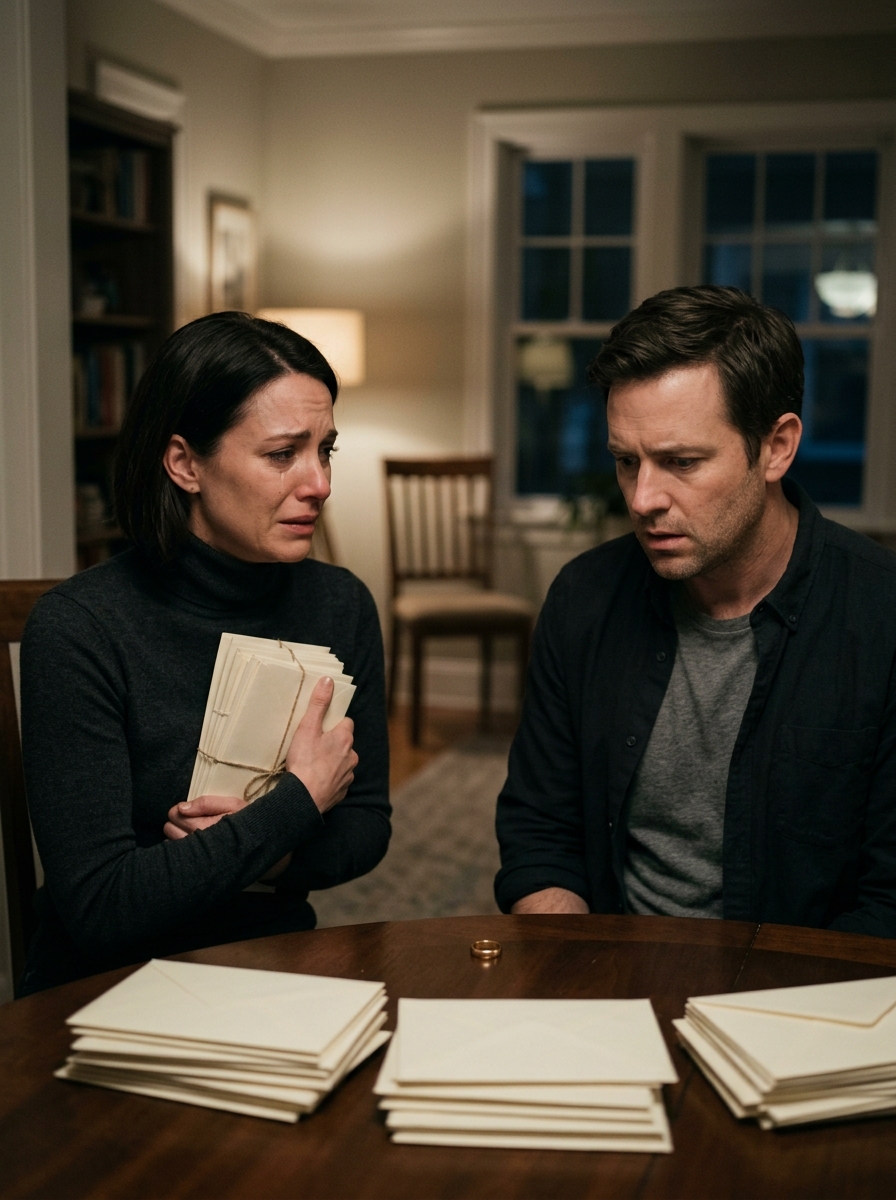
The kitchen clock clicked above the stove. Six minutes past nine. The invitations for our vow renewal were spread across the table in neat, expensive rows, their cream envelopes making the room look like it belonged to people who had solved something.
I put both hands flat on the wood.
“I want you,” I said again. “And I don’t want the marriage we were pretending to have.”
Her mouth tightened. “That sounds better.”
“It isn’t supposed to sound better.”
“No. I suppose it’s supposed to sound honest.”
Anika had a particular way of looking at me when she was trying not to cry. She focused on something just to the left of my face, as if emotions were easier to survive when viewed peripherally. I had noticed that look years ago and called it concentration. Later, I called it exhaustion. For eight months, I had called it the reason I could no longer initiate intimacy without feeling like I was asking her to leave herself for my benefit.
Now I wondered how many other names I had given it because the correct one would have required me to act.
“What exactly did you see?” she asked.
I hated the question. I had rehearsed the answer alone in the car, in the shower, walking the dog around the block. Every version sounded like an accusation.
“You’d start with me,” I said carefully. “You’d be responsive. You’d say yes. But then something would change.”
“What?”
“Your eyes.”
She looked down.
“You’d stare at the smoke detector or the corner of the room. Not at me. Sometimes you’d stop answering unless I asked you something twice. And afterward, you’d ask whether it had been good.”
“Maybe I was asking because I wanted to know.”
“You never sounded like you wanted to know. You sounded like you were waiting for a result.”
“Maybe I was.”
The words landed softly and did more damage than anger would have.
I pulled out the chair across from her. “Anika.”
“Don’t say my name like you’re about to make this easier.”
“I’m not.”
“Good.”
She stayed standing. Her hand rested on the invitations. We had designed them together on a Sunday afternoon in October, arguing over whether the date belonged in the center or along the bottom. Twelve years of marriage. Sixteen guests. Her sister and mine. Two close friends. No parents, because both of ours were dead or too complicated to invite.
The ceremony was supposed to take place in the courtyard behind the museum where Anika worked. There would be small plates, champagne, a string quartet that cost more than we had planned to spend, and new vows written by us instead of borrowed from a book.
“We were going to promise something,” she said.
“We still can.”
“What? That you’ll stop touching me because you’re afraid I’ll go blank?”
“I’m not afraid of touching you.”
She laughed once. “You haven’t touched me in eight months.”
“I’ve held your hand.”
“That’s not what I mean.”
“I know.”
“Do you?”
There it was: the question beneath every question. Not whether I had noticed. Whether I understood.
I had not understood. I had observed.
Those were not the same thing.
***
The last time I initiated intimacy, Anika had been wearing one of my old T-shirts and sitting against the headboard with a book open in her lap. She had been reading the same page for nearly ten minutes.
It was late March. Rain tapped against the windows. I had come home from a difficult day at the transit office where I worked and wanted, in the uncomplicated way people in long marriages sometimes want, to be close to the person whose shoulder had touched theirs at breakfast.
I asked if she wanted to come to bed.
She said, “Sure.”
Not yes. Not no. Sure.
I noticed the difference, but I did not trust myself to make anything of it. We had been married long enough that our vocabulary had become shorthand. Sometimes “sure” meant yes. Sometimes it meant give me five minutes. Sometimes it meant I’m too tired to explain why I don’t want to.
I should have asked.
Instead, I kissed her. She responded. We moved toward each other because we had moved toward each other hundreds of times before.
Then her body seemed to become an arrangement of tasks.
That was the only way I could describe it. She followed my lead, but there was no curiosity in her. No surprise. No arrival. She looked past me, and something in her face became smooth and distant.
I stopped.
She opened her eyes fully. “What?”
“Are you okay?”
“Yes.”
“Do you want to stop?”
Her expression changed then—not into desire, but alarm.
“No. I’m okay.”
I had asked the question I thought a good husband was supposed to ask. She had given the answer I thought a consenting wife was supposed to give. We had both performed the exchange correctly, and I had never felt more alone.
I said we could just sleep.
She turned away from me and pulled the blanket to her chin.
The next morning, I decided I would never initiate again.
I told myself this was restraint. A boundary. A way to make sure she never had to manage my disappointment by offering herself when she wasn’t truly present.
What I did not tell myself was that I was also afraid.
Afraid she would say no.
Afraid I would hear the no as proof that she did not want me.
Afraid I would ask what she did want and discover there was no answer that included me.
So I became careful. I made coffee. I kissed her forehead. I rubbed her shoulders when she asked. I slept beside her without reaching across the space between us.
Anika noticed the absence but not its cause.
“I thought you’d finally gotten tired of asking,” she told me that night in the kitchen.
“I hadn’t been asking.”
“That’s what I mean.”
“I didn’t stop loving you.”
“I didn’t say you stopped loving me. I said you stopped wanting me.”
The distinction was brutal because it was true. Wanting someone and knowing how to want them without turning that wanting into a demand were separate skills. I had acted as if refusing to ask was proof I had mastered both.
***
Anika did not take off her ring that night. She left it on the table between us until the metal left a pale indentation on the wood.
Then she picked it up and put it back on.
“I’m not deciding tonight,” she said.
“I know.”
“Don’t say that like you’re being generous.”
“I’m not.”
“You keep using the right words after the damage.”
I had no answer to that.