I Woke From a Coma—Then Heard What My Children Planned for My Wife
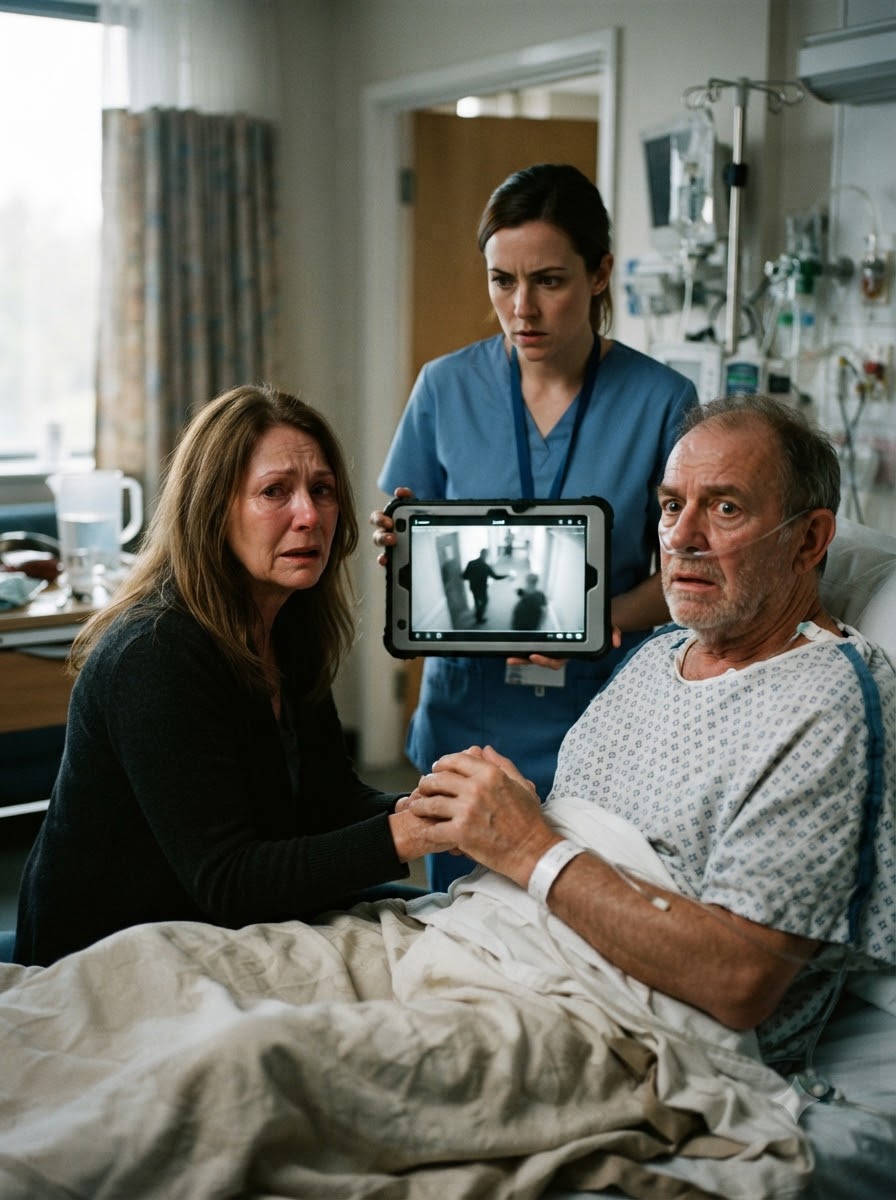
“As soon as he dies, we’re sending the old woman to a nursing home.”
My son said it six feet from my hospital bed.
I kept my eyes shut. A machine beside me marked each beat of my heart, steady and obedient, while everything inside me went cold.
Mark had always spoken quickly when he wanted something. Now he sounded patient, almost bored.
“Dad isn’t coming back,” he said. “Once the paperwork goes through, we sell the house and the company. Mom won’t be able to stop us.”
My daughter, Emily, stood somewhere near the foot of the bed. I heard the soft click of her handbag clasp.
“The house is in her name,” she said.
“That’s why the lawyer is handling her, too.”
I wanted to sit up. I wanted Mark to see my eyes and hear what I thought of his plan. But I had no idea what he had already done, or what he might do if he knew I’d heard him.
So I lay still.
Three days earlier, I had fallen on the stairs of our Manhattan house. That was what Anna had been told. I remembered a cup of tea in my study, the taste strangely bitter beneath the honey, and then nothing until the voices at my bedside.
The doctors called my condition a head injury complicated by heavy sedation. They expected me to wake, but no one could say when. I had already been awake for several minutes before Mark arrived.
Emily moved closer. “Mom’s been here every day.”
“Which is why she needs to go somewhere supervised,” Mark replied. “Far enough away that she can’t make a scene.”
Anna and I had been married thirty-five years. When I started Sullivan Engineering at our kitchen table, she worked evenings at a pharmacy to keep us insured. Later, when the business grew, she became its sharpest negotiator. People still assumed the company was mine alone. I let them. Anna never cared who got the applause.
I cared now.
A nurse entered, and my children stopped talking. She adjusted something near my shoulder and said visiting hours were nearly over. Mark asked whether my condition had changed.
“Not in a way I can discuss with you,” she said.
After they left, she checked my pulse with two fingers. Her name badge read Clara.
“You can open your eyes,” she whispered. “I saw you move them.”
I did. The effort felt immense.
Clara’s face stayed calm, but her fingers tightened around my wrist. “Are you able to speak?”
“Anna.”
“Do you want me to call her?”
I managed a nod.
Clara glanced at the closed door. “Is it safe for your children to know you’re awake?”
I shook my head.
She did not ask me to explain. She raised the head of my bed a little, brought me water through a straw, and called for the attending physician. By the time he came, I could answer questions in a rasp. He was pleased with my responses and concerned by my request for privacy. I told him my wife should be the first family member informed.
He agreed. Clara called Anna herself.
Anna arrived forty minutes later in the coat she wore to the hospital every morning. Her hair was damp from the rain. When she saw my eyes open, she gripped the back of a chair to steady herself.
I reached for her hand.
“Mark and Emily,” I whispered. “I heard them.”
I repeated what I could remember. Anna listened without interrupting. At first she looked bewildered, then wounded, and finally very still.
“Mark brought me forms yesterday,” she said. “He called them emergency planning. I wouldn’t sign. He said I was making things harder for everyone.”
“What forms?”
“A power of attorney. Something about a facility. He took them away when I asked to read them.”
Clara gave us a few minutes, then the doctor returned. He warned me that I was weak, that waking was not the same as recovering. He wanted more tests and observation. I agreed, on one condition: no information about me would be given to Mark or Emily. Anna was my named health-care proxy, and the hospital confirmed it in my chart.
That night, while I slept between examinations, Anna went home.
She called our attorney, Martin Vale, from the back of a taxi. Martin had drawn up our wills and the company agreements years before. He told her not to confront anyone or sign anything. Then he asked her to photograph every document she found.
At home, Anna went straight to my study. Mark had left a folder on the desk. Inside was a draft petition asking a court to appoint him my temporary guardian. Attached was a statement claiming I was unlikely to regain the capacity to make decisions.
There was a second petition concerning Anna.
It described her as confused, unable to manage her affairs, and vulnerable to undue influence. Beside it lay a brochure for a nursing facility in Pennsylvania. Someone had circled the monthly cost and written, in Mark’s angular handwriting, Move before listing house.
Anna photographed it all. Then she opened the locked drawer beneath the desk, where we kept the company’s shareholder records. I owned forty percent of Sullivan Engineering. Anna owned fifty-five. The remaining five percent was held for employees.
Mark knew those numbers. He had asked often enough about the day his share would come.
He had never liked the answer: there was no promised share.
By morning, I could sit up without becoming dizzy. The doctor wanted me to remain another day, but after reviewing my scans, he agreed I could leave with Anna if I understood the risks, had help at home, and returned for follow-up. I did not intend to go home.
Martin found us a quiet apartment near the hospital, registered under his firm’s account. Clara was on duty when I left. She helped Anna settle me into the car and pressed a sheet of discharge instructions into my hand.
“Read these,” she said. “Especially the part about rest.”
I thanked her for calling Anna. Clara shook her head, as though she had only done what anyone would do.
An hour later, Mark and Emily arrived at my hospital room and found the bed empty.
Anna saw the first message on her phone while I was asleep.
Where did you take him?
Then: This is reckless. He needs us.
By afternoon, Mark was calling every twenty minutes. Anna saved the messages and answered none of them.
Martin came to the apartment with his associate and a portable printer. He spread documents across the small dining table while I sat under a blanket, furious at how hard it was to hold a pen.
The paperwork Mark had left behind was ugly, but it was not enough to explain my fall. I kept thinking of the tea. Anna said she had not made it. Mark had come by that evening, while she was at a board dinner. He had told her afterward that he found me at the bottom of the stairs.
“Why was he at the house?” Martin asked.
“He said he wanted to discuss a contract,” Anna said.