My Daughter Left My Grandson Alone for Cancun—Then Police Tested the Bottle
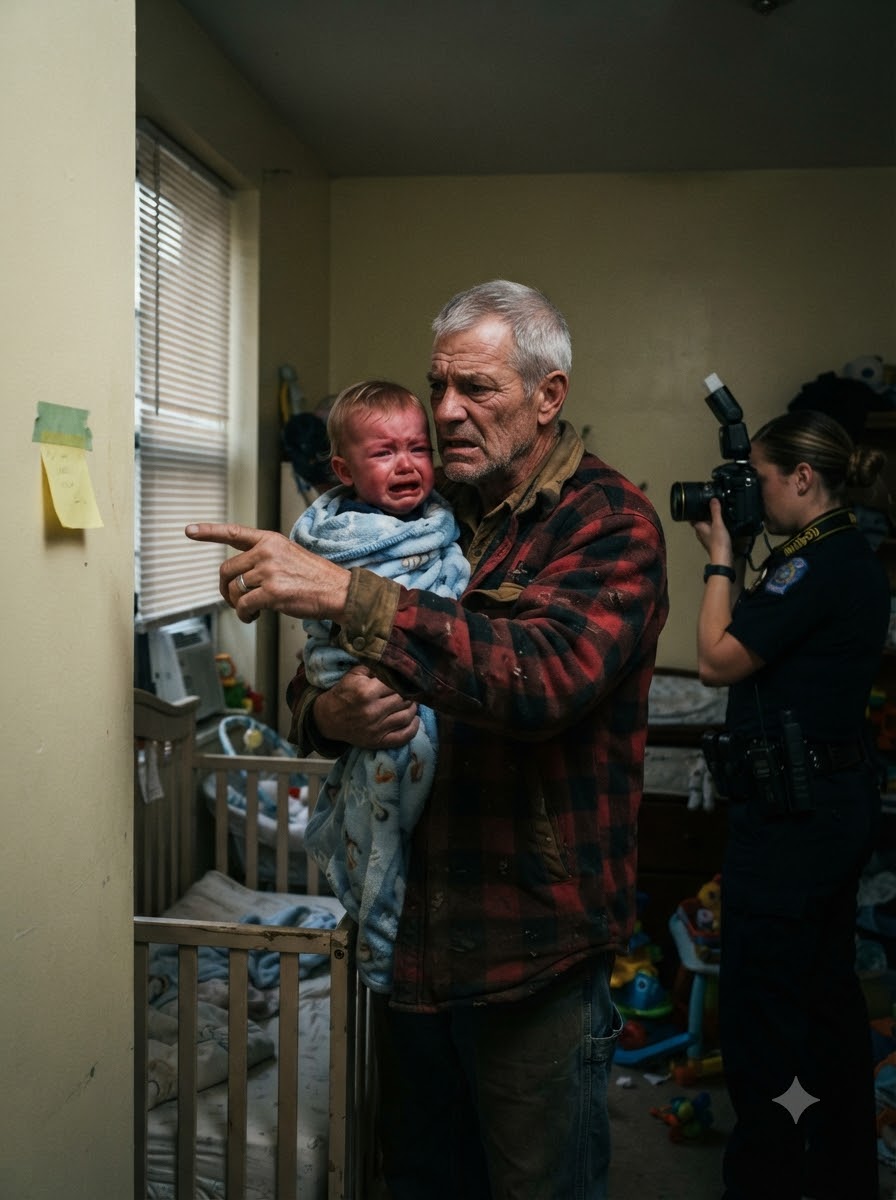
The gray folder felt heavy in my hands as the autumn wind blew down the sidewalk outside Chloe’s apartment building.
Detective Vance stood half a step beside me, his posture rigid, watching the corner of Oak and 14th Street where airport taxis usually turned in. On the bottom concrete step of the brownstone, a Child Protective Services supervisor named Miriam Keene held a leather clipboard against her coat.
I looked down at the top page inside the folder.
It was an official laboratory addendum from St. Jude’s Medical Center, stamped two hours earlier by the pediatric toxicology unit.
My eyes moved across the clinical lines twice before the words made sense. When the patrol officers had cleared Chloe’s kitchen on Wednesday afternoon, they hadn’t just photographed the four crusted bottles sitting in the sink. Because Leo had arrived at the emergency room lethargic beneath his screaming fits—his pupils sluggish and his mouth bone-dry—the attending physician had asked the police to send two of the unwashed bottles to the hospital lab.
Both bottles tested positive for doxylamine succinate and diphenhydramine.
Adult nighttime sleep aid.
I remembered Chloe’s voice over the thumping bass music from the beach bar in Cancun, laughing into the receiver as if I were bothering her over a misplaced sweater: “Dad, calm down. He sleeps most of the day anyway.”
He hadn’t been sleeping because he was an easy baby.
He had been sleeping because his own mother had dosed his last evening bottle so she could pack her white suitcase, roll it down the hallway to an airport rideshare at 4:30 in the morning, and board a flight to Mexico without the neighbors hearing him cry on her way out.
My stomach turned so violently I had to grip the iron railing of the porch steps.
“Keep turning the page, Mr. Hayes,” Detective Vance said quietly.
I lifted the lab sheet.
Underneath was a summary of subpoenaed bank transfers and building security logs compiled over the last forty-eight hours.
For the past six months—ever since Leo’s father walked out when Leo was five months old—I had been transferring twelve hundred dollars on the first of every month into an account Chloe told me belonged to a licensed home daycare run by a woman named Brenda Ortiz. I am sixty-one years old. I run a small heating-and-air repair shop on the south side of Chicago. Twelve hundred dollars a month meant I had skipped replacing my own work truck’s transmission and started working Saturday boiler calls again. I had done it gladly because I believed it kept my grandson safe while Chloe worked her front-desk job at a dental clinic.
Except the dental clinic had let Chloe go in July for chronic no-shows.
And Brenda Ortiz had only watched Leo for two weeks back in May before Chloe canceled the arrangement, opened a secondary checking account with a similar routing label, and pocketed every single transfer I sent.
The third sheet was a witness affidavit from Tasha Miller, the twenty-four-year-old veterinary tech who lived in Apartment 1B directly below Chloe.
Chloe had sworn on the phone that Tasha was supposed to pop in and feed Leo.
Tasha’s signed statement was four sentences long. She barely knew Chloe beyond holding the lobby door for packages. Chloe had never given her a key, never asked her to watch Leo, and hadn’t spoken to her since August. Worse, Tasha told police that on two previous weekends in September, she had heard Leo crying through the ceiling vents for hours late at night while Chloe’s car was gone from the lot.
“The hallway camera above the stairwell overwrites every fourteen days,” Detective Vance said, his voice steady and low. “So we only have video from the last two weeks. Your daughter wheeled her luggage out at 4:18 a.m. Tuesday. Nobody approached that door until you arrived with your spare key at 1:40 p.m. Wednesday. Thirty-three hours, Mr. Hayes.”
Thirty-three hours.
An eleven-month-old baby who couldn’t even walk yet, trapped behind wooden bars in a dark room with an unplugged monitor, four empty bottles in the sink, and a note taped to the drywall like he was a houseplant someone might water if they happened to drop by.
Wait—there was one more question that had haunted me since Wednesday afternoon.
“Why the note?” I asked, my voice rasping. “If she didn’t ask Tasha, and she didn’t tell me she was leaving, who was the note on the nursery wall for?”
Detective Vance looked at me with quiet pity.
“It was for you, Mr. Hayes,” Vance said. “Or whoever broke the door down if the neighbors called management about the crying. We pulled her outgoing text messages from the airport gate in O’Hare. Ten minutes before boarding, she texted the girl she traveled with: ‘Left a note by the crib saying I’m out of town so if my dad swings by on Thursday with groceries like he usually does, he’ll just take Leo for the weekend and won’t blow up my phone till Sunday.’”
I stood frozen on the cold concrete.
Every Thursday afternoon around four o’clock, on my way home from my supply house on Kedzie, I usually dropped a bag of fruit, diapers, and rotisserie chicken on Chloe’s counter. Some weeks I texted first; some weeks I just knocked.
She had left my grandson on Tuesday morning counting on the chance that I might show up fifty-eight hours later on Thursday afternoon—or that if I didn’t, a drugged eleven-month-old baby would somehow survive until Sunday night in a crib.
The only reason I had come on Wednesday instead of Thursday was because a commercial boiler part had been back-ordered at my supplier, cutting my workday short by twenty-four hours.
If that brass valve had been in stock on Wednesday morning, Leo would have been in that crib another day and a half.
A yellow airport cab turned off 14th Street and slowed in front of the fire hydrant.
“Let me handle the initial contact, Arthur,” Detective Vance said, stepping off the bottom stair onto the sidewalk. “Do not hand her anything, and let her speak on the record if she chooses to.”
The rear door of the cab swung open.
Chloe stepped out onto the curb wearing oversized tortoiseshell sunglasses, a woven straw sun hat, and a cropped linen jacket over a bright coral sundress. Her shoulders were sunburned a deep pink from the Mexican sun. She was smiling down at her phone screen with one hand while pulling her white hard-shell suitcase out of the trunk with the other.
The cab pulled away, leaving her standing on the sidewalk.
She turned toward the apartment steps—and stopped dead.
First she saw me standing by the iron railing.
Then her eyes shifted left to Miriam Keene with the State of Illinois lanyard around her neck.
Then she looked at Detective Vance and the uniformed officer stepping out of the cruiser behind the unmarked sedan.
Chloe pushed her sunglasses up onto her head. The breezy, tanned smile vanished, replaced by the tight, defensive scowl I had seen a hundred times whenever anyone held her accountable for a late bill or a dented fender.