My Husband’s Double Entered Our Marriage—Then I Found My Name on His Death Plan
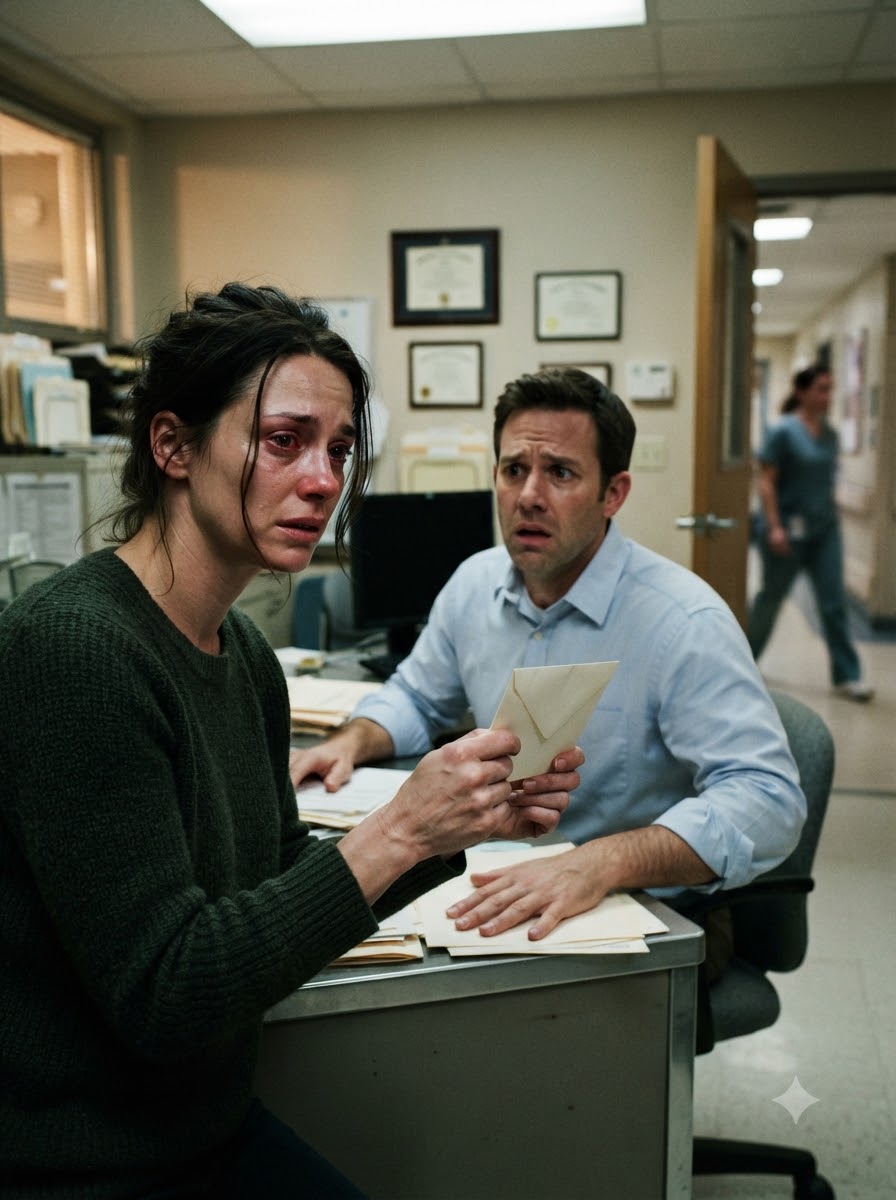
At 2:47 on a Thursday morning, my twin brother called from Tokyo and asked whether my husband was really at the hospital.
The question was so strange that for several seconds I thought I had misunderstood him.
“What do you mean, really?” I whispered.
I was sitting upright in bed, the sheets cold beside me. James’s side had been empty since midnight. He had kissed me in the kitchen before leaving, already dressed beneath his wool coat, and told me a patient had suffered a sudden brain hemorrhage.
“He said the surgery was urgent,” I told Michael. “A craniotomy. He was called in.”
“Sarah, I need you to listen to me.”
His voice had changed. My brother had always been the reckless one, the twin who laughed first and apologized later. I had never heard him sound afraid.
“Is James at Boston General?”
“Yes.”
“Call them.”
The line went quiet except for the faint hum of the hotel lobby where Michael worked. He was the general manager of a luxury hotel in central Tokyo. It was nearly four in the afternoon there, but his voice made it feel like the middle of the night.
“Why?” I asked.
“Just call.”
I reached for my phone and dialed the hospital’s main number. After three transfers, a tired night supervisor answered. I gave her James’s full name and medical department.
“Yes,” she said. “Dr. Morrison was called in, but the patient stabilized. The surgery was moved to morning. Dr. Morrison left about twenty minutes ago.”
My fingers tightened around the phone.
“Are you sure?”
“I’m looking at the overnight log.”
James had left the hospital twenty minutes earlier.
He could have been on his way home.
He could have been standing outside our house.
“Sarah,” Michael said.
“What?”
“I’m looking at him right now.”
For one foolish second, I thought he meant through a video call. Then I heard the elevator bell and the murmur of voices behind him.
Michael managed the Shirokawa Hotel. He was in the lobby, standing near the reception desk.
He had seen a man who looked exactly like James checking in with a platinum-blond woman in a red dress.
Same height. Same dark hair. Same narrow shoulders. Same habit of pushing his hair back whenever he listened to someone speak.
“He’s wearing the Harvard ring,” Michael said.
The ring had belonged to James for six years. I had given it to him on our anniversary, after finding an antique jeweler who could replicate the old medical-school design. He wore it every day.
“Send me a picture,” I said.
Michael did.
The image arrived while I was still staring at the hospital’s number on my screen.
The man in the photograph was my husband.
He was standing beneath the hotel’s golden chandelier, one hand resting lightly on the woman’s back. His profile was unmistakable. Even the small scar beside his left eyebrow was there.
I opened my mouth, but no sound came out.
A second photograph arrived. Then a third.
In one, he was signing a registration card. In another, he was accepting two key packets from a receptionist. In the last, he had turned toward the woman, smiling.
Michael called again.
“Don’t call his name,” he said. “Don’t come here. I don’t know what’s happening, but keep your phone on.”
Before I could answer, our front door opened downstairs.
The old brass latch clicked. A moment later, I heard footsteps in the entryway.
My husband called softly, “Sarah?”
I stopped breathing.
James came into the bedroom wearing navy scrubs. His white coat hung over one arm. His hair was damp with rain, and he looked tired in the familiar, ordinary way I had seen a hundred times.
“The surgery was postponed,” he said. “The patient stabilized.”
I stared at him.
He crossed the room and kissed my forehead.
“I’m sorry I woke you.”
He smelled of hospital soap and the cedar aftershave he had worn for years.
On the phone, Michael whispered, “He’s still here.”
I lowered my gaze before James could see my face.
“Are you all right?” he asked.
“I’m tired.”
“That makes two of us.”
He placed his coat over a chair, went into the bathroom, and turned on the shower.
I stayed frozen until the water began to run.
Then I whispered to Michael, “Keep taking pictures. Don’t let him see you. Don’t confront anyone.”
“What are you going to do?”
“I don’t know.”
“You need to leave the house.”
I looked at the bathroom door. Behind it, water struck porcelain. The man who had entered my home had James’s voice, James’s body, James’s wedding ring.
“I’ll call you if I need help.”
I ended the call and sat on the edge of the bed.
Our German shepherd, Atlas, was downstairs. Usually, when James came home, Atlas charged up the stairs, whining and thumping his tail against the walls. That night he did not move from his bed.
I went down to check on him.
He was awake, rigid, his ears angled toward the staircase. When James appeared at the bottom step, Atlas looked at him once and turned his head away.
“Hey, boy,” James said.
Atlas made a low sound in his throat.
The man stopped.
For the first time, something passed over his face that was not exhaustion.
It was irritation.
I went back upstairs and pretended to sleep.
In the morning, he made coffee. I watched him from the doorway as he added two sugars.
James always took one.
“You’re staring,” he said.
“I didn’t sleep well.”
“Neither did I.”
He kissed my cheek, but the gesture was mechanical. When I played our Ella Fitzgerald song while making breakfast, he smiled politely and continued reading the news on his tablet. James used to pull me into his arms whenever that song played. He had once danced with me in a gas station parking lot because it came through the car radio.
Now he didn’t even look up.
I told myself people could change overnight under stress.
Then I pressed my ear against his chest while we lay in bed.
For six years, I had known the soft fluttering murmur in his heart. James had been born with a small ventricular septal defect. It was harmless, his cardiologist said, but the sound was there—faint, steady, familiar.
The chest beneath my cheek was silent.
I lifted my head.
“What?” he asked.
“Nothing.”
He reached for me.
I moved away and pretended to be reaching for my phone.
Over the next week, I became a detective inside my own marriage.
Michael called every day. The man in Tokyo remained at the hotel with the blond woman, whose name was Vivian Cole. She had booked a suite under a private travel company registered in Singapore. The man using James’s name attended meetings, accepted gifts, and went to expensive restaurants. At the hotel, he was introduced as “Dr. Morrison.”
Michael never got close enough to speak with him. He had the hotel’s security director quietly copy lobby footage and preserve the registration records.
“I’m not saying this is your husband,” Michael told me. “I’m saying the evidence says it’s a man who could pass for him.”