Marcus Left Chloe His Life Insurance—Then My Lawyer Played a Bank Call
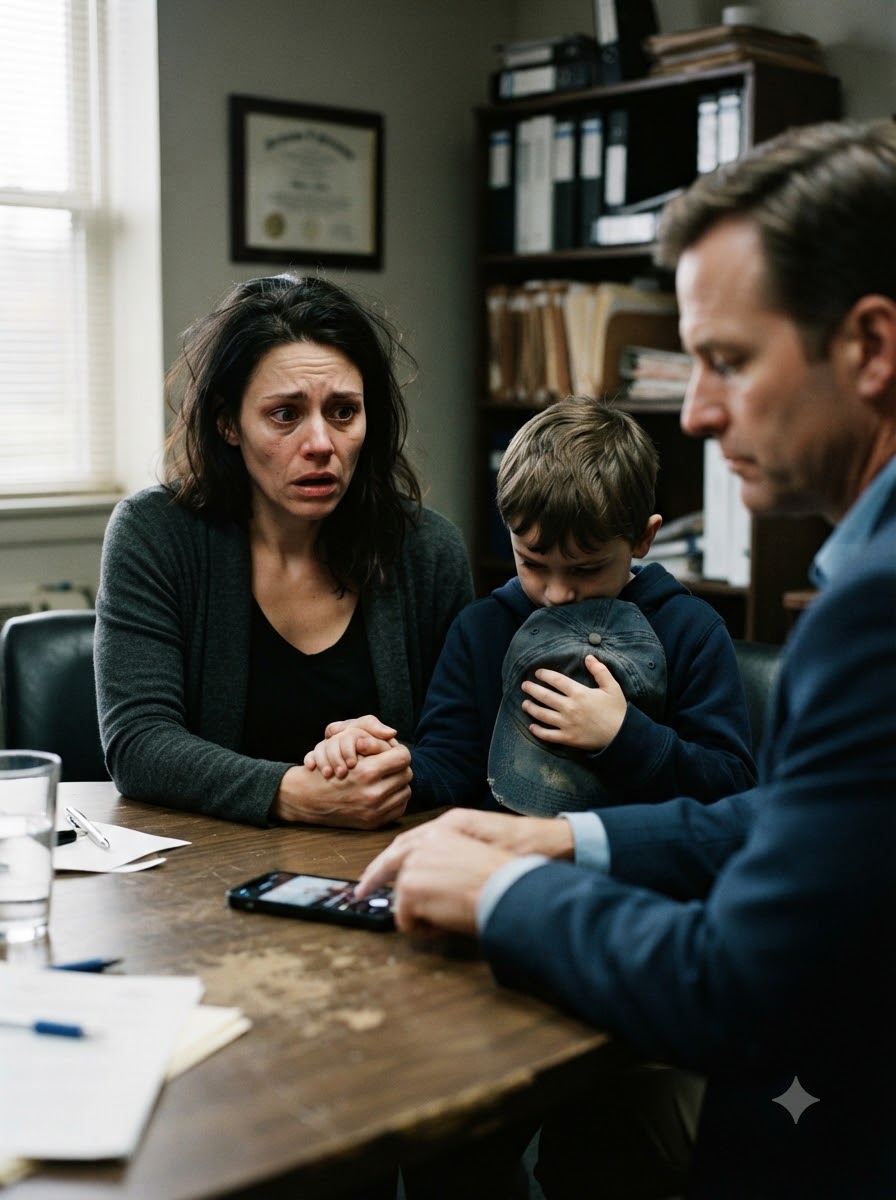
The insurance letter arrived while I was washing Marcus’s coffee mug.
It was the blue one with a chipped handle that he refused to throw away. Two weeks after his heart attack, I was still moving his things from one place to another, unable to decide whether putting them away would hurt more than seeing them.
The envelope lay on the kitchen counter beside Leo’s spelling homework. I opened it with wet hands.
Marcus had changed the beneficiary on his $750,000 life insurance policy six months earlier. The form named Chloe Miller as the sole beneficiary. It listed me and our ten-year-old son as removed beneficiaries.
I read it three times. Then I turned the page over, as if there might be an explanation on the back.
Leo came into the kitchen wearing one of Marcus’s old T-shirts. “Is that about Dad?”
I folded the letter before he could see it. “Insurance paperwork.”
“Do we have to do something?”
“No, honey. Go finish your homework.”
He went, though he looked back at me from the doorway.
I waited until he was upstairs before I called the number on the letter. The woman at the insurance company confirmed the change, confirmed the date, and said the signature had passed their review. Chloe had already submitted a claim.
When I hung up, I set Marcus’s mug in the sink. I could not bear to touch it again.
Chloe was Marcus’s “work best friend.” She had been our Friday-night dinner guest for almost three years, arriving with a bottle of wine and some funny story from the clinic. She knew Leo’s favorite pizza. She had helped me choose flowers for Marcus’s funeral.
For eight years, Marcus had managed the office at the dental and pediatric clinic I owned. I had opened it before we married, first with two treatment rooms and a receptionist’s desk I’d bought secondhand. By the time Marcus died, we had twelve employees and more patients than I could comfortably see. I spent fifty hours a week treating children and adults. Marcus handled schedules, vendors, payroll, and the stack of bills I was always grateful to find gone from my desk.
Chloe worked at the front desk. I had hired her on Marcus’s recommendation.
I called her that night. She answered on the second ring.
“Rachel.” Her voice was soft. “How are you and Leo?”
“I got a letter from the insurance company.”
There was a pause. I heard a television in the background, then a door closing.
“I thought someone would tell you,” she said.
“Why would Marcus name you?”
“I don’t think this is a conversation we should have over the phone.”
“Were you having an affair with my husband?”
She breathed out. “Marcus was unhappy, Rachel. You know how much you worked.”
I ended the call before she could say anything else.
The next morning, I called a probate litigation attorney named Elaine Sterling. I brought the insurance letter, Marcus’s death certificate, and our old policy statement. On that statement, Leo and I were named to receive equal shares.
Ms. Sterling put the two documents side by side. She did not tell me the money was mine. She asked who paid the premiums, whether Marcus had access to clinic accounts, and who could authorize a change in payroll.
“Marcus handled all of it,” I said.
“Then we start there.”
She advised me to send the insurer a formal dispute and request that payment be held while the source of the premiums was investigated. She also told me not to discuss the case with Chloe.
I asked if I should fire her.
“Put her on paid administrative leave while you preserve records,” Ms. Sterling said. “Have someone witness it. And change the office passwords before anyone opens for the day.”
By nine, my accountant had suspended Marcus’s and Chloe’s access to the clinic systems. Our head dental assistant, Priya, stood with me when I told Chloe not to return to work until we finished reviewing the books.
Chloe stared at me. “Because Marcus loved me?”
“Because I need to review the accounts,” I said.
She looked at Priya, who said nothing, then picked up her purse and left.
I had thought I would feel ashamed making that announcement. Instead, I was frightened by how little I knew about my own business.
Marcus kept his office neat. His pens stood upright in a cup. He had left a cardigan hanging on the back of his chair, and for several minutes I could only look at it.
Priya came in carrying a box of bank statements. “I found these behind the printer,” she said. “He asked me to shred them in January. I forgot.”
The first statement showed a payment to the insurance company from the clinic’s operating account. So did the next. Marcus had told me the premiums came out of his paycheck. They had not.
My accountant, David, arrived with his laptop and stayed until the lights in the waiting room clicked off automatically. The policy payments were easy to find once we knew where to look. Marcus had coded them as owner benefits, a category I had never approved for life insurance.
The other payments took longer.
They appeared as consulting fees to C.M. Patient Services, a vendor I didn’t recognize. Some months there were two. Near the end of the year there were five.
“Do we have invoices?” David asked.
I searched Marcus’s files. The invoices were there, neatly numbered, each describing referral coordination or patient outreach. The clinic had no referral coordinator. We had never hired one.
The bank images showed that Marcus had signed every check. The endorsement stamp on the back read Chloe Miller.
I sat down on his office floor with the statements spread around me. I had worried that he might leave me. I had never imagined he was sending clinic money to someone who ate at our table.
David printed a report. Over three years, the checks totaled $210,000.
“That doesn’t mean she kept it all,” he said carefully. “We need the other side of the transfers.”
I knew. I also knew that fifty dollars missing from petty cash would have sent Marcus searching through receipts. He had hidden $210,000 among expenses I was too busy to question.
The following day, Priya asked to speak with me alone.
She told me she had seen Chloe at Marcus’s desk after hours the previous August. Marcus was dictating while Chloe typed. When Priya came in for her lunch bag, Chloe closed the screen.
“I thought they were working,” Priya said. “I wish I’d said something.”
“You had no reason to think otherwise.”
Priya twisted her hands. “There’s something else. Chloe asked me last month whether Leo was named on any clinic accounts. She said Marcus worried about what would happen if you both died.”
A few days later, our IT contractor recovered a deleted folder from Marcus’s computer. It contained drafts of the insurance beneficiary form, a scanned copy of his driver’s license, and an email to Chloe: Once the first payment lands, we need to move carefully.
There was no first payment I could identify. The email made my hands shake anyway.