My Daughter-in-Law Used My Emergency Card—Until Disney Exposed Six Years of Fraud
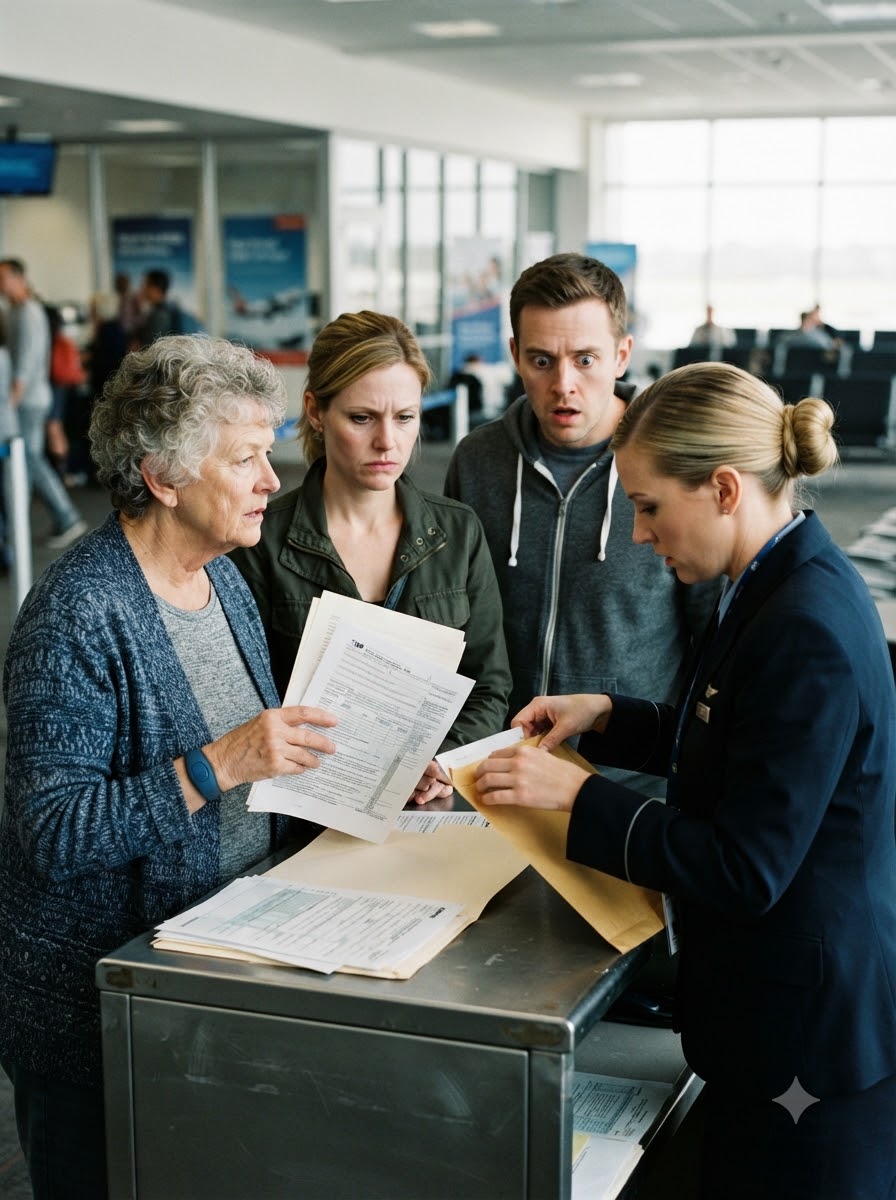
At 5:45 the next morning, I stood in my kitchen wearing the blue cardigan Courtney had once said made me look “approachable.”
The house was silent.
On the counter lay the three-page checklist my daughter-in-law had handed me at Easter dinner.
Scrub baseboards.
Wash dog bedding.
Mop the mudroom.
Prepare meals for two German Shepherds.
Take the dogs outside every four hours.
Clean out the refrigerator.
Put fresh sheets on the guest beds.
And, at the bottom, in bold letters:
Be at the house by 5:30 A.M. Do not be late.
I had watched Courtney and Trevor’s three children from six-thirty in the morning until six at night for six years. I had made breakfast, packed lunches, helped with homework, taken them to doctors’ appointments, sat through school plays, and kept a running list of their allergies and medications.
I had never charged them.
Not once.
I had done it because they were my grandchildren. I had done it because Trevor said daycare would bankrupt them. I had done it because Courtney cried during a family dinner and told me she was terrified they would lose their house.
So I opened my home to them every weekday.
In return, I received a grocery bill Courtney called “an investment in family,” occasional criticism about the lunches I packed, and increasingly casual assumptions that my time belonged to them.
The Easter dinner was when the assumptions became an insult.
Courtney had placed a glossy envelope beside my plate. Inside was a three-page list of chores and a handwritten note.
“Since you’re staying behind,” she had said, “we figured you could make yourself useful.”
I looked across the table at her mother, Linda, who was wearing a new red sweater and holding up a bright blue MagicBand.
“I’ve never been to Disney World,” Linda announced. “Courtney said I deserve one special trip.”
Linda’s bracelet had been purchased with my credit card rewards.
I knew because I had received the redemption notice.
I also knew something else.
Three days before Easter, American Express had called me about a $6,400 charge to Disney Resort Reservations. The charge had been made using my supplementary card, the one I gave Trevor years earlier.
The card was for emergencies involving the children.
A hospital visit. A prescription. A broken furnace in winter.
Not a deluxe resort room for Linda.
When I asked Trevor about the charge, he had said it was probably a mistake and promised to check.
He never did.
Then I discovered the $1,800 daycare tax-credit refund.
Courtney had cashed a check stating she had paid me as a licensed caregiver.
She had not paid me a penny.
That evening, while everyone laughed over lemon pie, Courtney leaned back in her chair and made the announcement.
“We leave tomorrow at seven,” she said. “Make sure you’re at the house by five-thirty.”
Trevor reached for another roll.
“Come on, Mom,” he said. “Linda’s never been to Orlando, and somebody has to stay back with the dogs.”
I folded the checklist and placed it inside my handbag.
“When does your flight leave?” I asked.
Courtney smiled. “Seven A.M. We’ll see you at five-thirty.”
“No,” I said.
She blinked.
“No?”
“I won’t be there.”
For a moment, nobody moved.
Then Courtney laughed as though I had made a joke.
“You’re not seriously upset about the trip.”
“The trip isn’t the problem.”
“Of course it is,” she said. “You wanted to go. We assumed you’d understand that Linda should have the opportunity.”
“I understand perfectly.”
Trevor sighed. “Mom, please don’t make this dramatic.”
I looked at my son. “The card you used for the resort was issued to me.”
His face changed.
Only slightly.
But I saw it.
Courtney’s hand stopped halfway to her water glass.
Trevor swallowed. “What card?”
“The supplementary American Express card. The one I gave you for medical emergencies.”
“It was an accident,” Courtney said quickly.
“Was it?”
“Obviously. We were booking the rooms and probably clicked the wrong card.”
“You used it to book Linda’s room.”
“It’s a family vacation,” Trevor said. “You make it sound like we stole a kidney.”
“You also used it for the park tickets,” I said.
Courtney looked at Trevor.
He stared at his plate.
I continued. “And you cashed a daycare reimbursement check claiming you paid me $1,800 as a licensed caregiver.”
The room went so quiet I could hear the refrigerator humming in the kitchen.
Linda lowered her MagicBand.
Courtney’s expression hardened. “That was paperwork.”
“Paperwork says I was paid.”
“You were paid in other ways.”
“No, I wasn’t.”
“We let you be part of the children’s lives,” she snapped.
“They are my grandchildren.”
“And we gave you purpose.”
Trevor’s head jerked up. “Courtney.”
But she was no longer pretending to be embarrassed.
“You had time,” she said. “You enjoyed being needed. Don’t act like you were doing us some enormous favor.”
I looked at the children, who were sitting at the end of the table, confused and silent.
Then I gathered my purse.
“I hope you enjoy Disney World.”
Courtney smiled again. “We will.”
I did not tell them what I knew yet.
I had not spent six years raising three children without learning the value of patience.
Instead, I waited until the next morning.
At five-thirty, Courtney’s house was dark.
At five-forty, Trevor texted me.
Where are you?
At five-forty-five, he called.
I watched his name flash across my phone and let it ring.
Then I opened my laptop and forwarded one email.
It went to American Express, my accountant, and a lawyer whose name I had found through a friend at church.
The subject line read: Unauthorized charges and fraudulent tax documentation.
At six-oh-two, Courtney called from the airport.
“You need to get here now,” she said.
“Why?”
“The dogs are still here.”
“I’m aware.”
“You agreed to watch them.”
“I agreed to watch my grandchildren. I did not agree to watch dogs while you traveled on my money.”
“That is not what happened.”
“Then you won’t have trouble explaining it.”
She lowered her voice. “If you ruin this trip, I swear I will make sure you never see the children again.”
That sentence told me everything I needed to know.
Courtney had always treated access to my grandchildren as a leash. She pulled it when she wanted free childcare, tightened it when I questioned her spending, and loosened it whenever she needed a holiday gift or a favor.
This time, she had pulled too hard.
“I’m hanging up now,” I said.
“You can’t do this to us.”
“I’m not doing anything to you.”
I ended the call.
At six-thirty, my attorney, Marlene Ortiz, called.
She had reviewed the documents I sent.
“You need to preserve everything,” she said. “Do not argue by phone. Do not threaten them. Save the texts, emails, receipts, and any messages about childcare.”
“I have six years of calendars,” I said.
“Good. Keep them.”
“I also have copies of the school forms listing me as the emergency contact.”
“Excellent.”
“And I have a handwritten note from Courtney asking me to sign a statement saying she paid me.”
There was a pause.
“What exactly did the statement say?”
I read it to her.